Pool surrounds and damp walls: when the backyard is wetting the house
How pools, paved entertaining areas and built-up backyards put water against Shire walls, and how to fix the drainage without starting over.
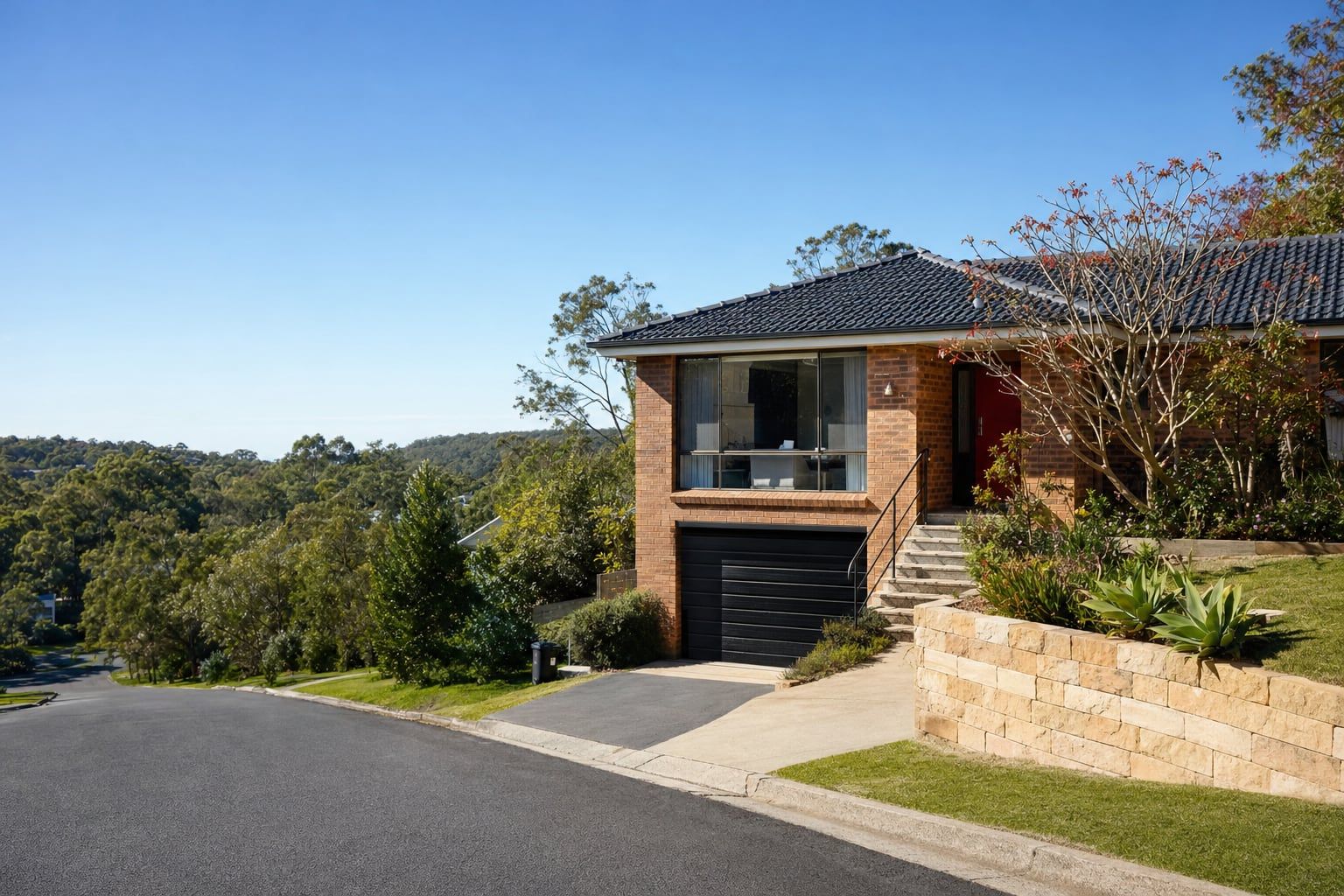
Pool surrounds and damp walls are closely linked in the Sutherland Shire. The Shire has one of the highest rates of backyard pools in Sydney, and alongside them, decades of paved entertaining areas, outdoor kitchens and raised lawns. Many were added long after the house was built. When they’re built at the wrong level or fall the wrong way, every rainfall, hose-down and splash puts water against the back wall of the house, often above its damp course.
The damp that results looks a lot like rising damp. But it’s a drainage problem, and it’s usually cheaper to fix.
How the backyard wets the house
Paving laid too high. Pool surrounds and patios are often laid level with the back door or the internal floor, for a step-free transition. That puts the paving above the damp course, which sits below the floor. Water then sits against brick that was never meant to get wet.
Paving that falls toward the house. Paving should slope away from the walls. Many surrounds were laid flat, or settle over time to fall toward the house, so water runs to the wall and soaks in.
Raised garden beds and lawns. Turf topdressed year after year and garden beds built against the walls also sit above the damp course.
Buried weep holes. In brick veneer and cavity brick homes, paving laid over the bottom course of bricks blocks the weep holes, so water in the cavity can’t drain out.
Downpipes and overflow. Downpipes discharging onto the paving, and pool overflow or backwash running near the house, add more water right where it does harm.
Signs it’s the backyard
Only the back of the house is damp, or the walls beside the pool and entertaining area.
It’s worse after rain or pool use, and eases in dry spells.
The paving is level with or above the bottom of the wall, or you can’t see the weep holes.
Water pools against the wall after rain.
How to fix it
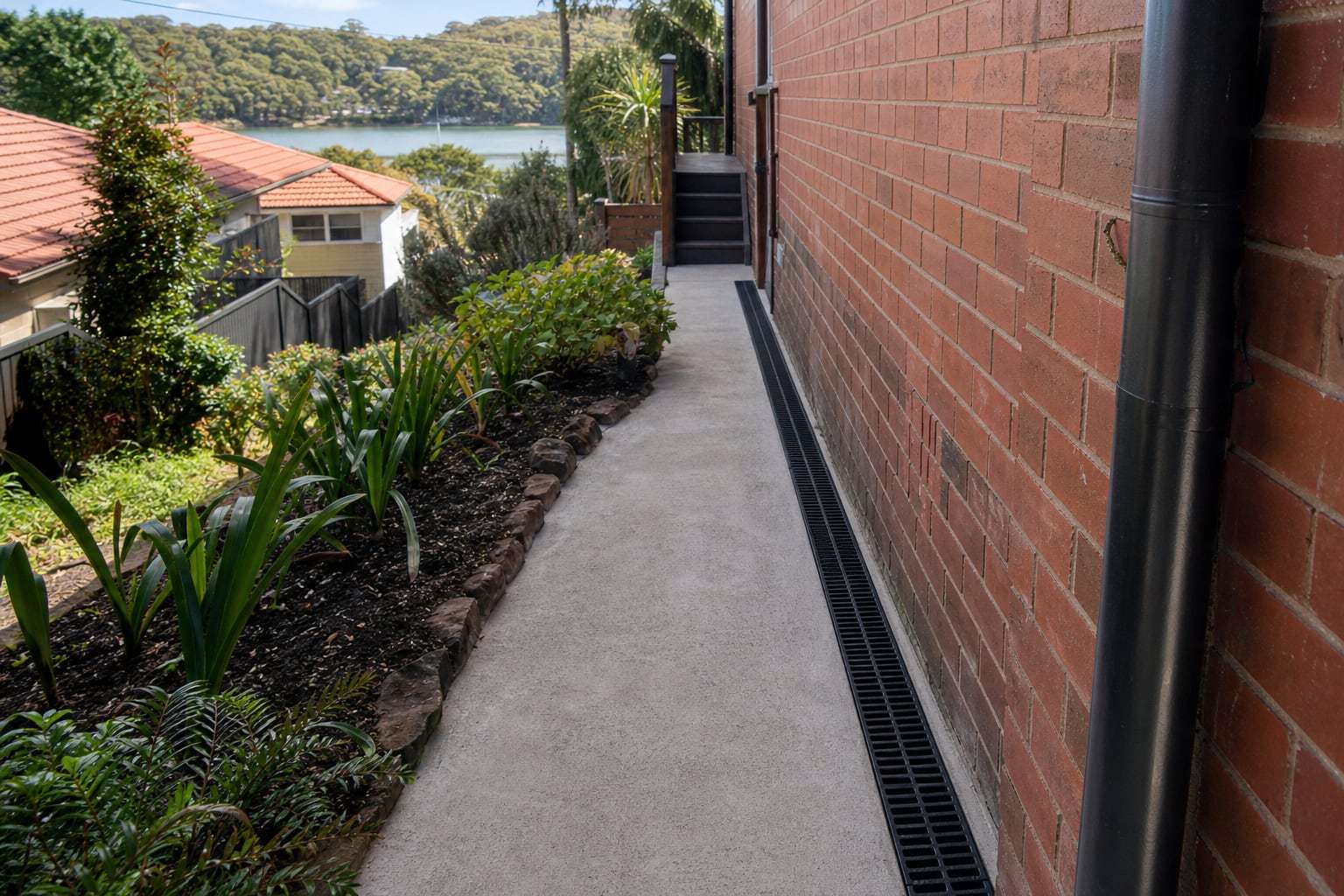
Lower a strip along the house. The most effective fix is usually to lower the paving next to the wall so it sits below the damp course and the weep holes. Often only a strip along the house needs to change.
Install a strip drain. A channel drain along the base of the wall catches surface water before it reaches the brick and carries it to the stormwater. A gravel strip over a drain between the paving and the wall does a similar job.
Regrade the fall. Paving that falls toward the house can be relaid to fall away.
Clear the weep holes. Cut back paving or render that covers them, and fit weep hole covers to keep insects out without blocking drainage.
Connect downpipes. Every downpipe should run into working stormwater.
Manage pool water. Under Sydney Water’s rules, pool backwash goes to the sewer, not to the stormwater, the garden or against the house. Check your setup with a pool professional.
Our page on tanking and drainage covers how this work is done.
When there’s rising damp too
Some homes have both: a backyard putting water against the back wall and a failed damp course letting water rise elsewhere. Once the drainage is sorted, walls with genuine rising damp get a new barrier, usually a chemical damp course in brick.
Repairing the wall
Even after the water is redirected, the plaster or render on a wall that’s been wet for years is full of salt. It needs to come off and be replaced with a salt-tolerant finish. See salt-damaged plaster repair.
Decks and outdoor kitchens
Timber decks built low against the house cause a different version of the same problem. They cover subfloor vents, collect leaves and water against the base of the wall, and stop the brick drying. Outdoor kitchens and built-in barbecues fixed against the house can block weep holes and direct runoff to the wall. When we inspect, we check behind and under these too, and recommend gaps, flashings or drainage where they’re needed.
Planning a new pool or patio?
If you’re about to build, tell your pool builder or landscaper where the damp course and weep holes are, and ask for the paving to finish below them with a fall away from the house and a drain along the wall. It’s far easier to get it right at the start.
Getting it checked
We take readings on the affected walls, look at paving levels and falls, weep holes, downpipes and pool drainage, and tell you what’s causing the damp. Our page on rising damp treatment covers the full process, and our overview of Sutherland Shire rising damp explains how we work.
Updated
Pool surrounds and damp walls: common questions
Something else on your mind? Call and ask.
Can pool splash really make a wall damp?
On its own it's usually minor, but combined with paving that falls toward the house and a surround laid above the damp course, it adds up. Pool backwash and overflow discharged near the house can be a bigger source.
Do I need to rip up the whole patio?
Not always. Often a strip along the house can be lowered or replaced with a drain and gravel, leaving the rest of the paving in place.
Where should pool backwash go?
Sydney Water's rules require it to go to the sewer, not the stormwater or the garden. Check your setup with your pool professional. It shouldn't be discharged against the house.
Waterproof Tanking and Drainage in the Sutherland Shire
More guides for Sutherland Shire homeowners
- Damp in split-level homes: lower floors cut into Sutherland Shire sandstoneWhy the lower floors of split-level homes on Shire slopes get damp, how to tell it from rising damp, and what keeps them dry.
- Damp in 1970s brick homes: what to check in Shire houses of that eraHow double brick, cavity brick and brick veneer homes of the sixties and seventies get damp, and the checks that find the cause quickly.