Rising Damp Treatment Sutherland Shire
Readings first, the real cause fixed second, and a wall that stays sound once it's finished.
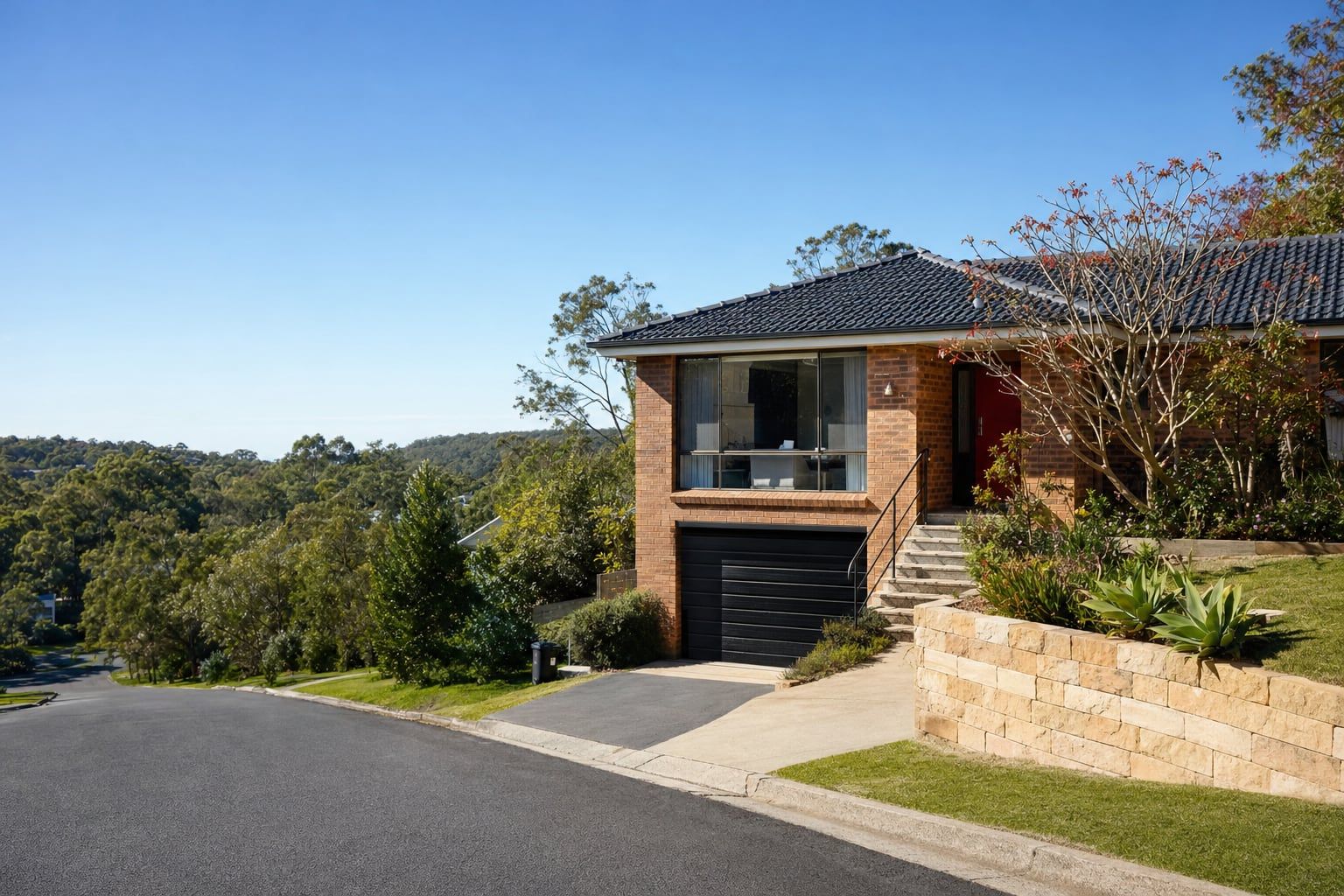
Rising damp treatment in the Sutherland Shire looks a bit different from the inner suburbs. Most Shire homes are younger, many built between the 1950s and the 1980s, on sandstone ridges and sloping blocks running down to the Georges River, the Woronora, Port Hacking and the beaches. True rising damp happens, especially in older brick homes, but a lot of the damp we’re called to comes from the block around the house: retaining walls, split levels cut into rock, pool surrounds and paving.
Finding the real cause
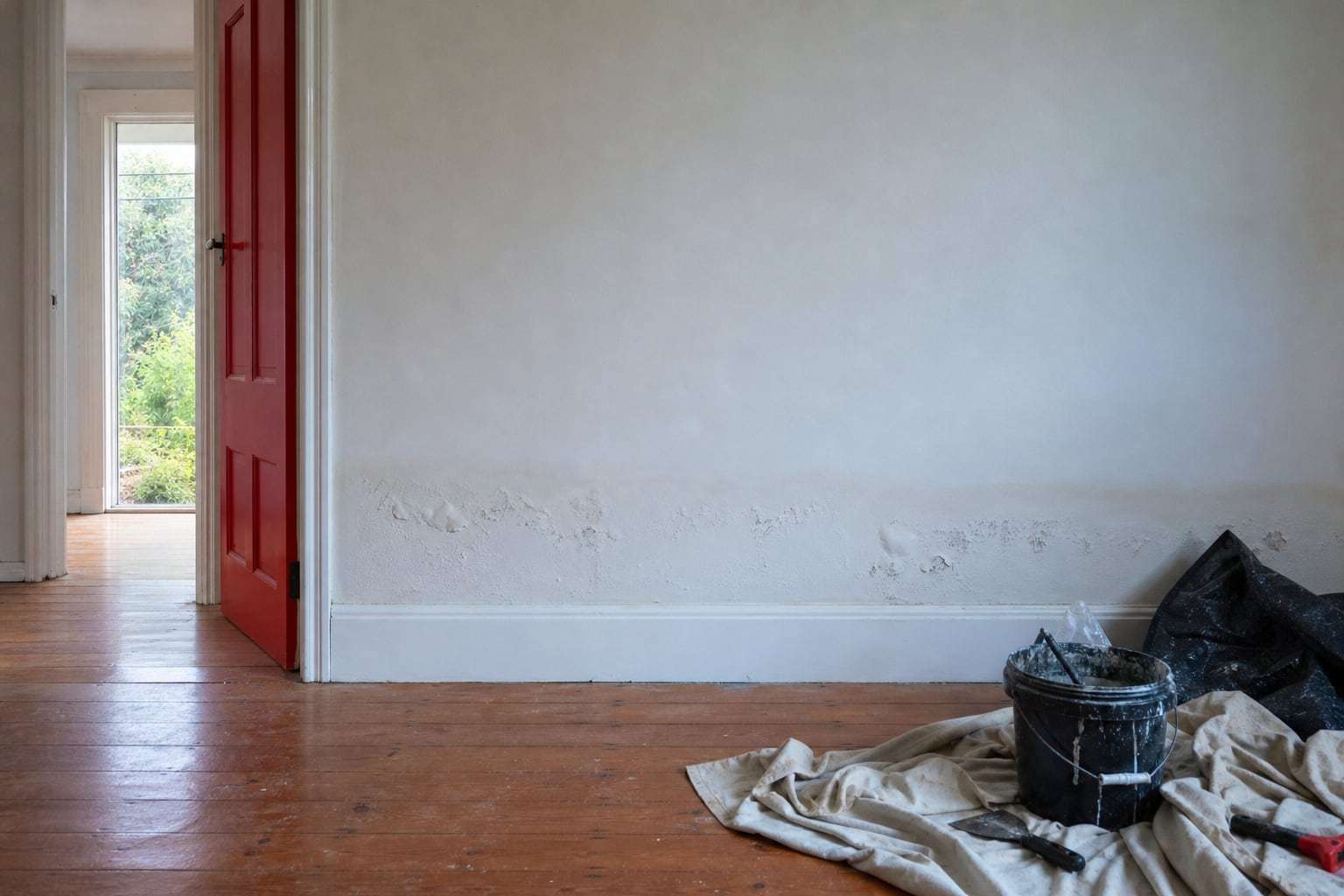
We start with a moisture meter on every affected wall, low and higher up, and a salt check on the plaster or render. Rising damp has a clear profile: wettest at the base, drying out below about a metre, roughly level, and present in dry weather as well as wet.
When the readings say otherwise, we look outside. A pool surround draining toward the back wall, garden beds built up over weep holes, a retaining wall holding soil against the house, a lower level cut into sandstone. Any of these can soak a wall without rising damp being involved.
What the fix might include
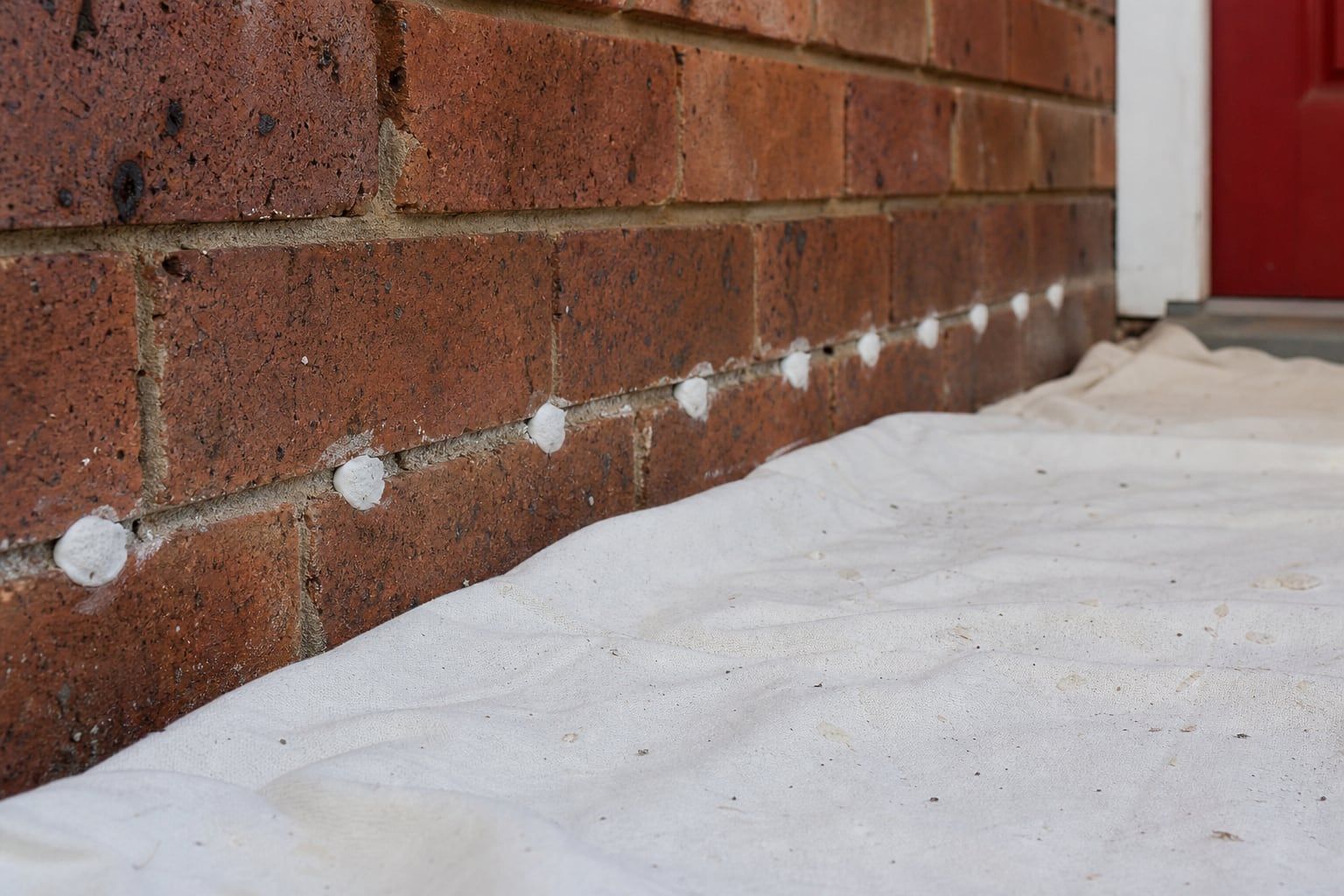
- A chemical damp course for solid and double brick walls with failed or bypassed courses.
- A physical damp course for sandstone bases and walls injection can’t seal.
- Waterproof tanking and drainage for split levels, walls against retaining walls and backyards that drain toward the house.
- Subfloor ventilation for homes with timber floors over a crawl space.
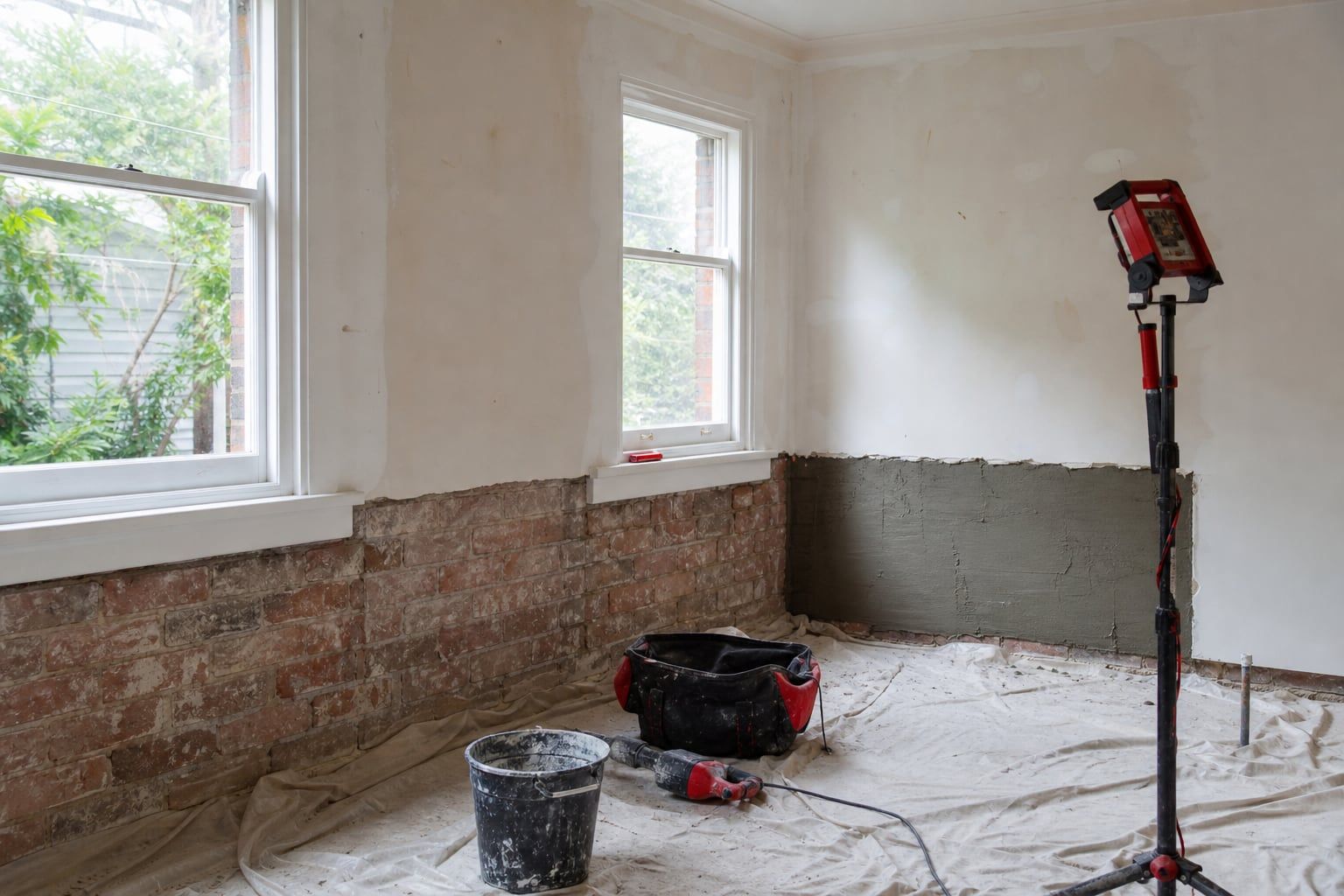
- Salt-damaged plaster repair to give you back a sound wall.
What makes the Shire different
Sandstone and slope. The Shire sits on Hawkesbury sandstone with thin, sandy soil over it. Rain soaks in, hits the rock and runs along it. Houses cut into slopes in Como, Illawong, Jannali, Kareela, Sylvania and Grays Point catch that water on their uphill walls. Our guide on damp in split-level homes explains it.
Backyards. Pools, paved entertaining areas and built-up garden beds are everywhere, and many were added years after the house. When they drain toward the house, the back wall gets wet. See pool surrounds and damp walls.
Houses of a certain age. The double brick and brick veneer homes of the sixties and seventies are now fifty or sixty years old. Our guide to damp in 1970s brick homes covers what typically goes wrong.
The coast. Cronulla, Woolooware, Kurnell and Bundeena get salt air, which loads exposed render with salt.
One plan, in writing
Most Shire homes end up with two or three of these together, and the order matters: water sources outside first, then the barrier, then the finish. The written quote sets that order out, wall by wall, so you can see what each part does and what it costs before anything starts.
The finished wall
With the water stopped, salt-loaded plaster or render is removed past where the salt has reached. The wall is given time to dry, then a salt-tolerant render goes back on, ready for paint. Damaged skirtings are replaced.
If you’re not sure what you’re seeing, our page on rising damp symptoms explains each sign and what usually causes it.
Updated
What good rising damp treatment looks like
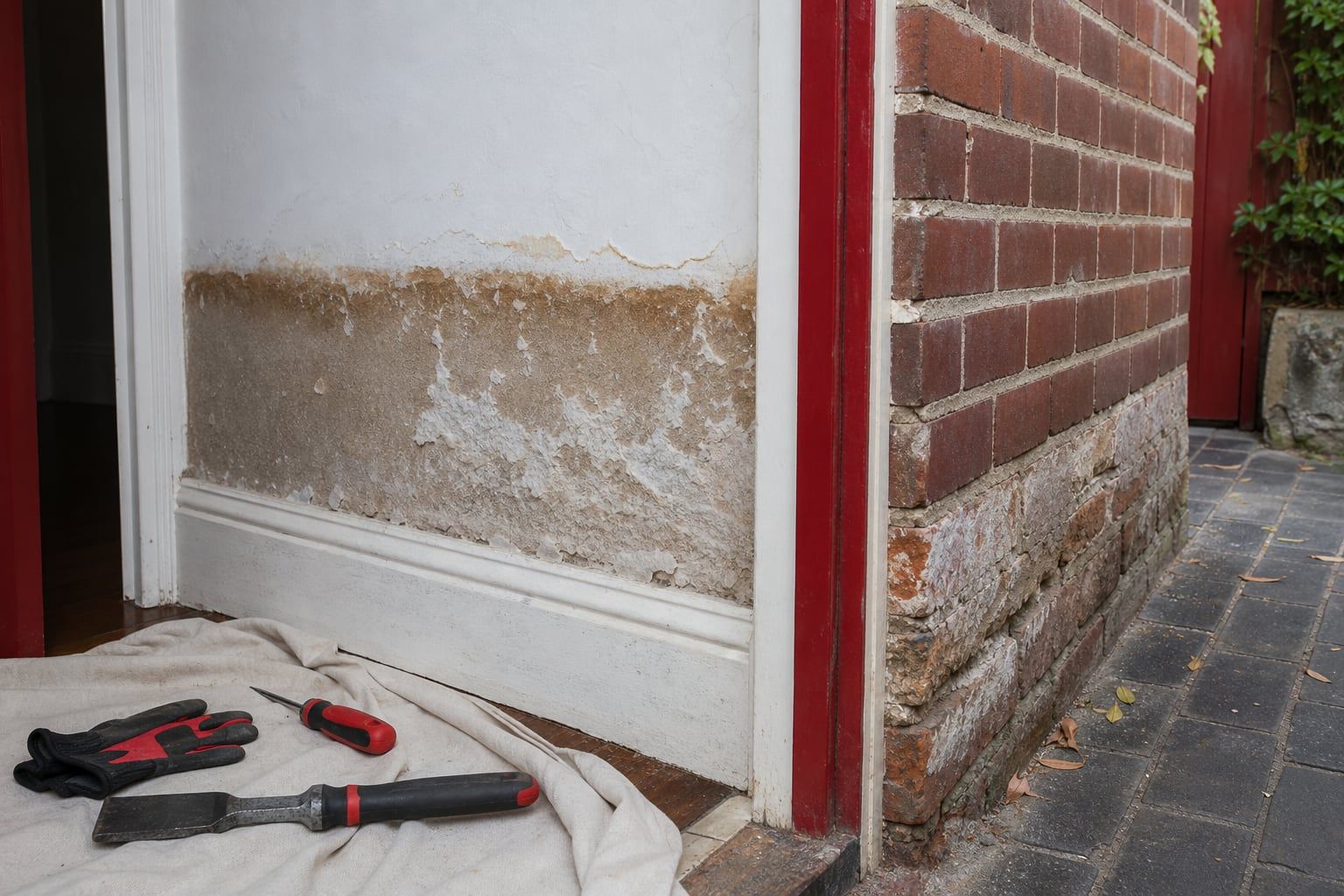
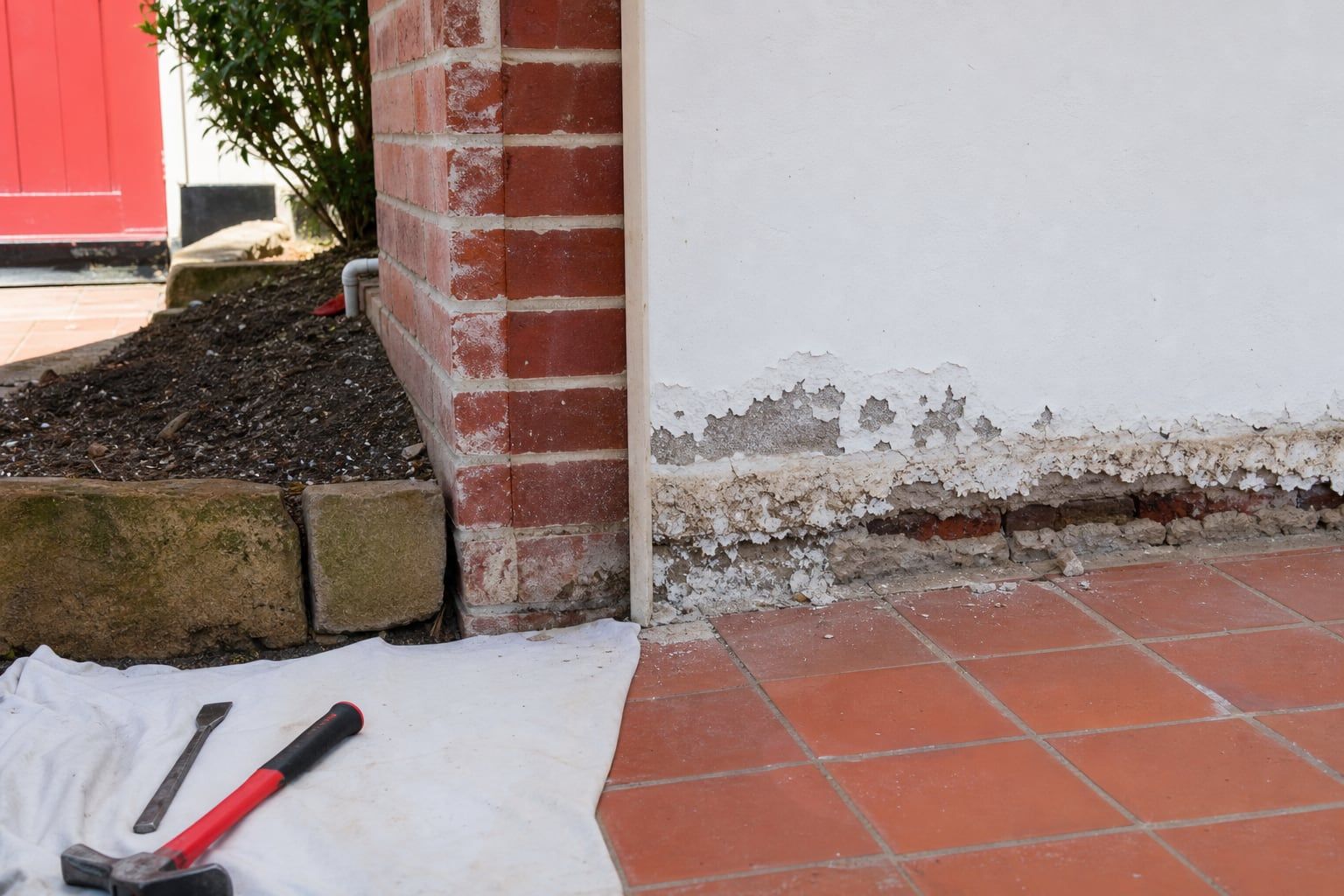
Rising Damp Treatment in the Sutherland Shire: step by step
- Take readingsMeter readings low and high on every affected wall, with a salt check on the plaster or render.
- Walk the blockRetaining walls, pool surrounds, paving, weep holes and the subfloor are checked for the water source.
- Cut off the waterDamp course, drainage, tanking or airflow, chosen from what the readings showed.
- Put the wall backSalt-loaded plaster is replaced with salt-tolerant render once the masonry has dried enough.
Rising Damp Treatment across the Sutherland Shire
Rising Damp Treatment questions in the Sutherland Shire
Something else on your mind? Call and ask.
My house was built in the 1970s. Can it have rising damp?
Yes, though it's less common than in older homes. In houses of that era the cause is more often soil, paving or a pool surround built up over the damp course, or blocked weep holes, which let water bypass a course that's still intact.
The downstairs room of my split-level is damp. What does that mean?
Lower levels cut into the slope usually get water through the side of the wall from the hill behind. They often need drainage or tanking rather than, or as well as, a damp course.
Do you work around pools?
Yes. Pool surrounds that fall toward the house are a frequent cause of damp walls in the Shire. We look at how the coping and paving drain as part of every inspection.
Rising Damp Treatment guides for Sutherland Shire homeowners
- Damp in split-level homes: lower floors cut into Sutherland Shire sandstoneWhy the lower floors of split-level homes on Shire slopes get damp, how to tell it from rising damp, and what keeps them dry.
- Damp in 1970s brick homes: what to check in Shire houses of that eraHow double brick, cavity brick and brick veneer homes of the sixties and seventies get damp, and the checks that find the cause quickly.