Rising damp symptoms: what the signs mean in Sutherland Shire homes
The signs of damp in Shire homes, and how to tell rising damp from the slope, the backyard and the coast.
Reading damp in Sutherland Shire homes
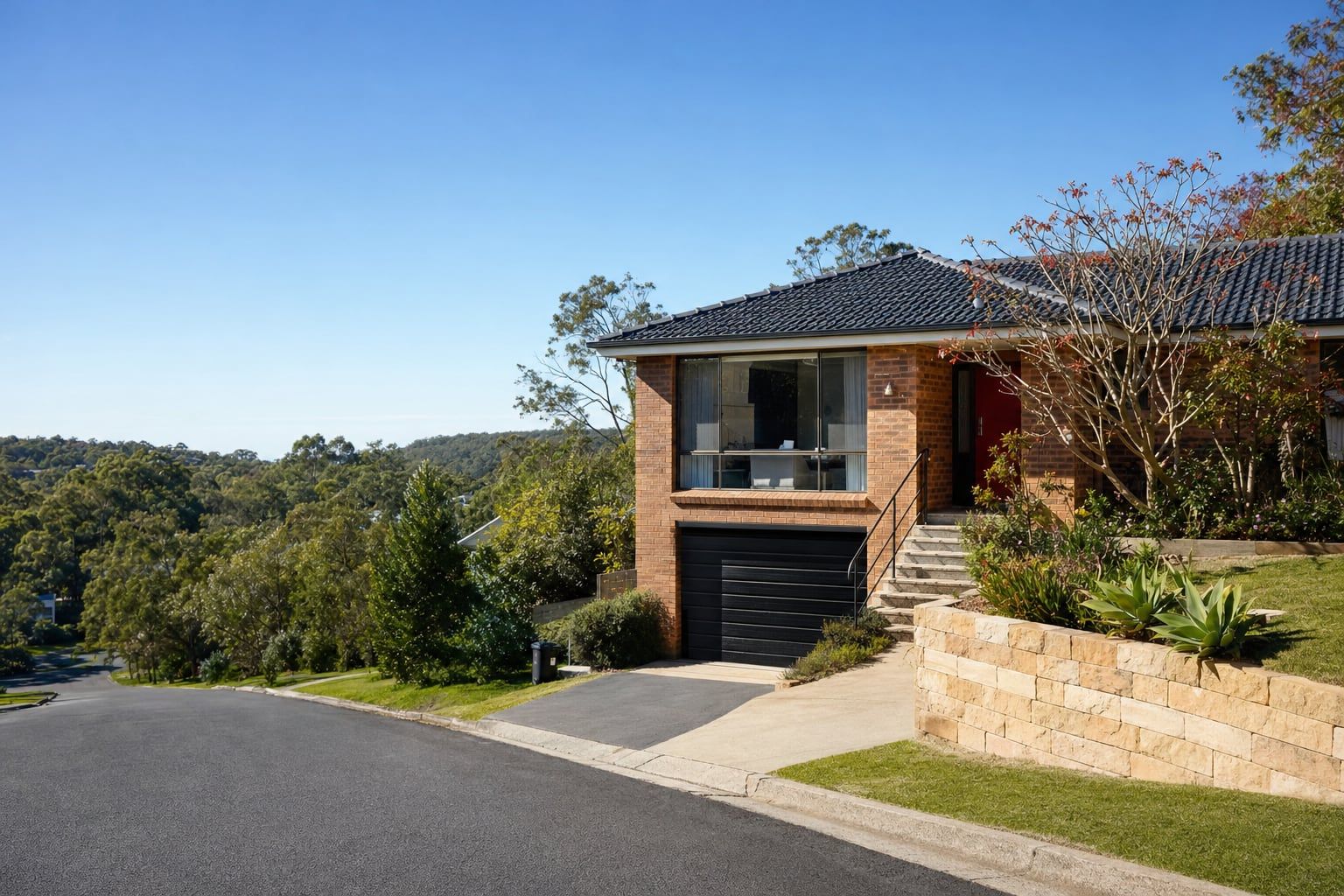
Rising damp symptoms in the Shire often overlap with three other causes that are just as common here: water coming through the walls of split-level homes from the slope, backyards and pool surrounds that drain toward the house, and salt air near the beaches. The signs below show what we see most often and what each usually points to.
Blistering paint low on the wall
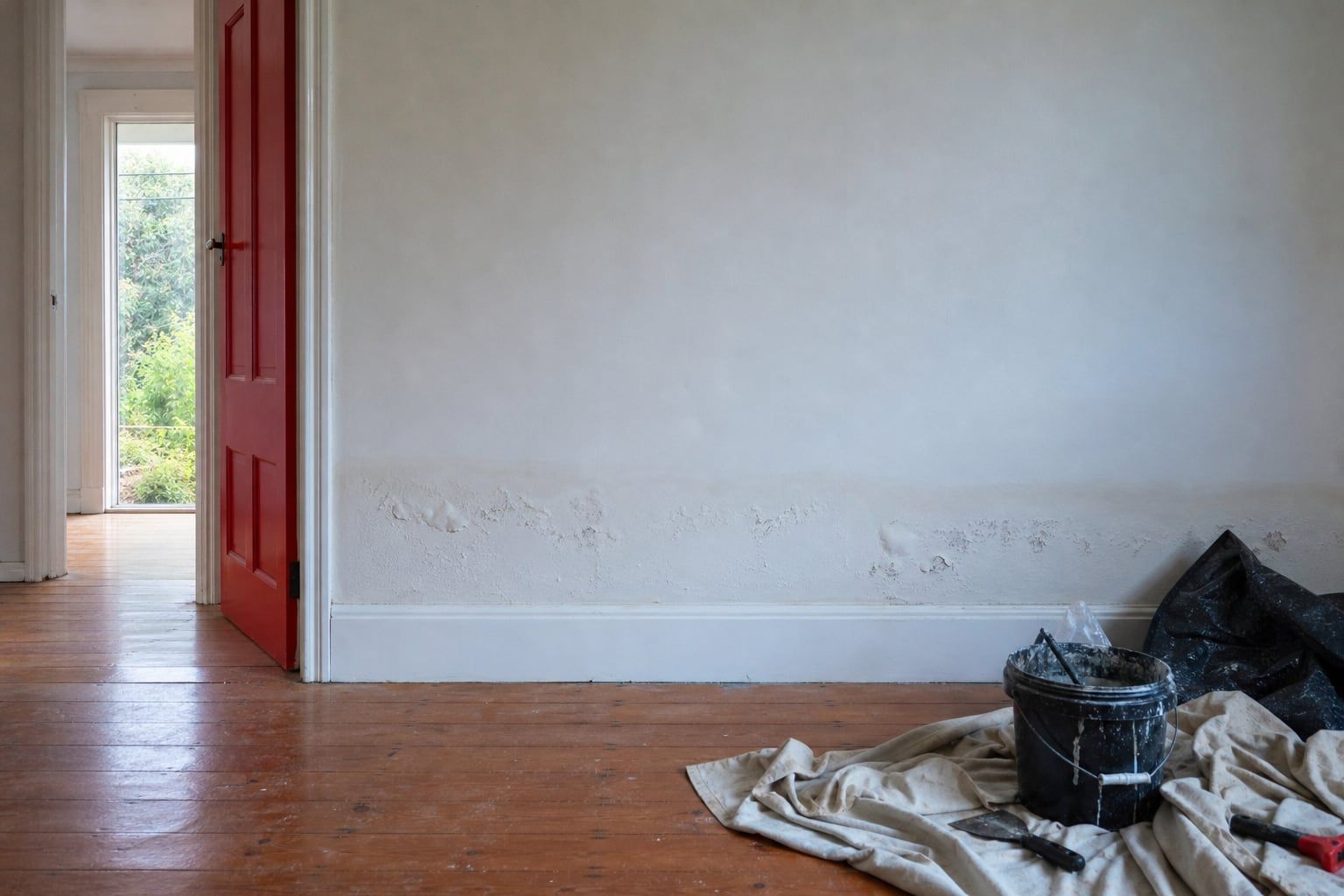
Paint lifting in bubbles or flakes near the floor is caused by moisture and salt pushing out from behind it. A band through several rooms at a similar height points to rising damp. Damage only on the back wall points to the backyard.
Salt crystals and white powder
Fluffy white crystals or powder on plaster or brick are salts left as water evaporates. Low on internal walls, they suggest water from the ground. On ocean-facing render in Cronulla or Kurnell, they’re often from the air.
Soft or crumbling plaster
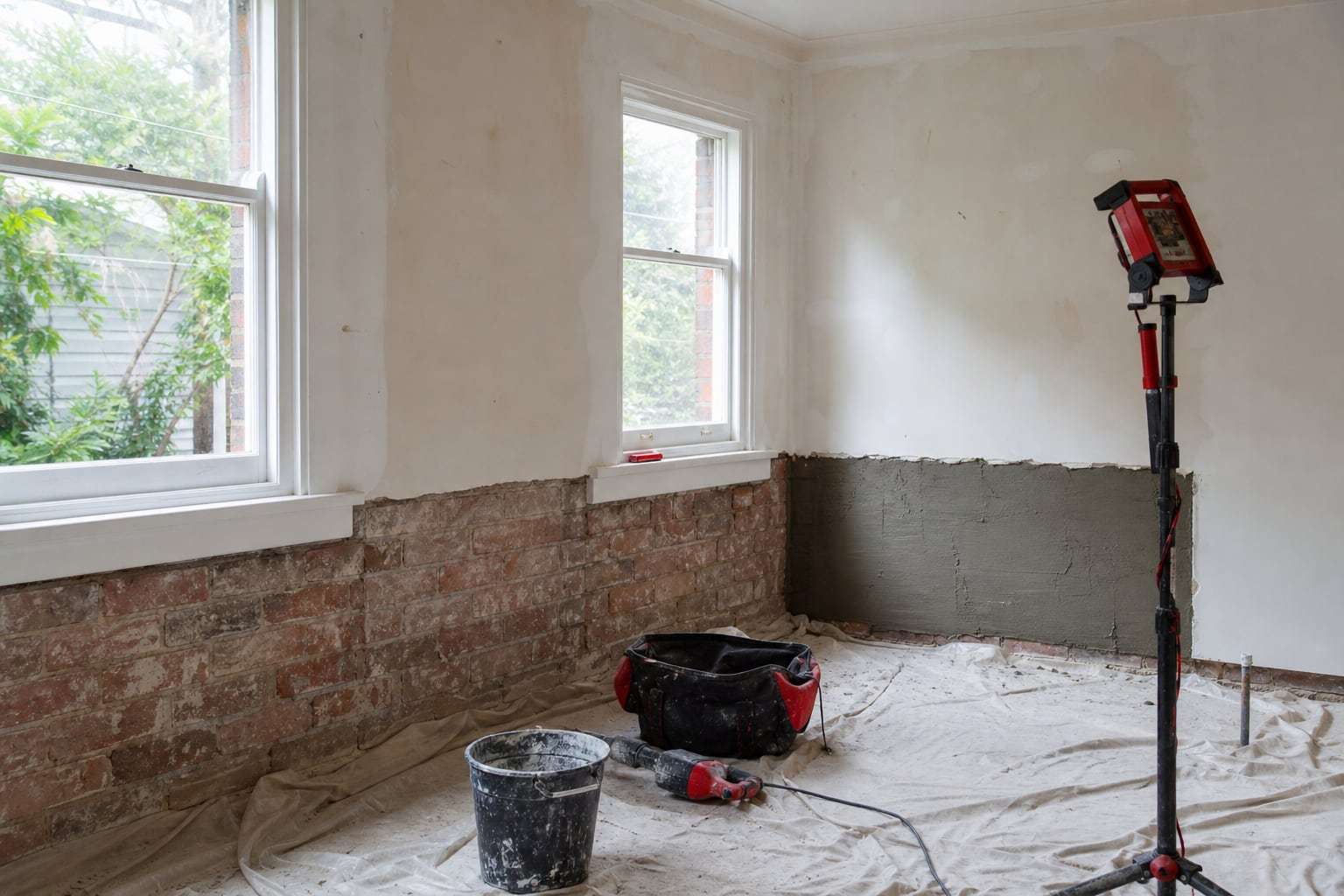
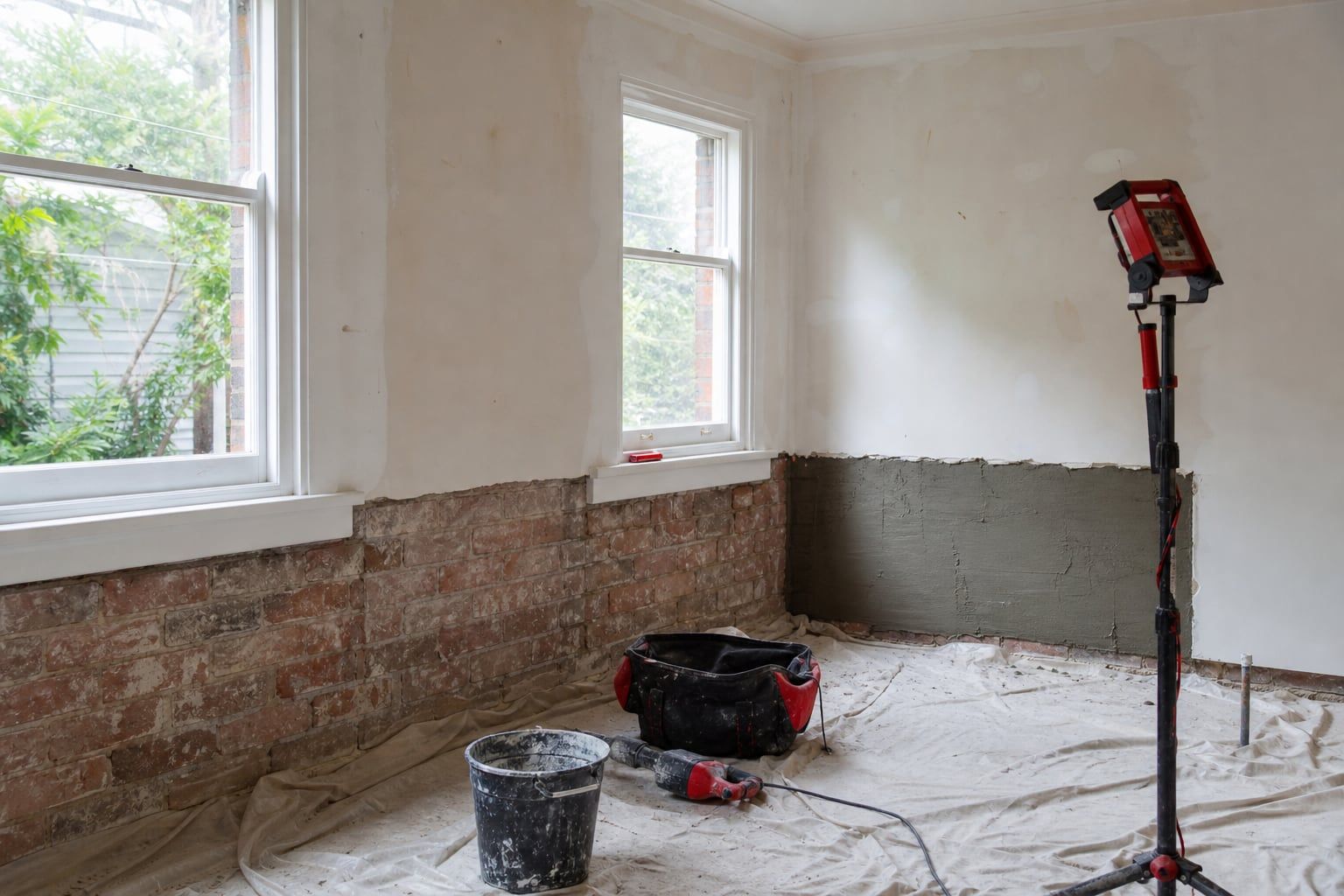
Plaster that crumbles, sounds hollow or turns sandy has been broken down by salt. It needs salt-damaged plaster repair once the cause is fixed.
Skirtings that swell or rot
Skirtings that swell, soften or pull away from the wall have been sitting in damp. In brick veneer homes they’re often the first visible sign that water is reaching the timber frame.
Weep holes hidden by paving or soil
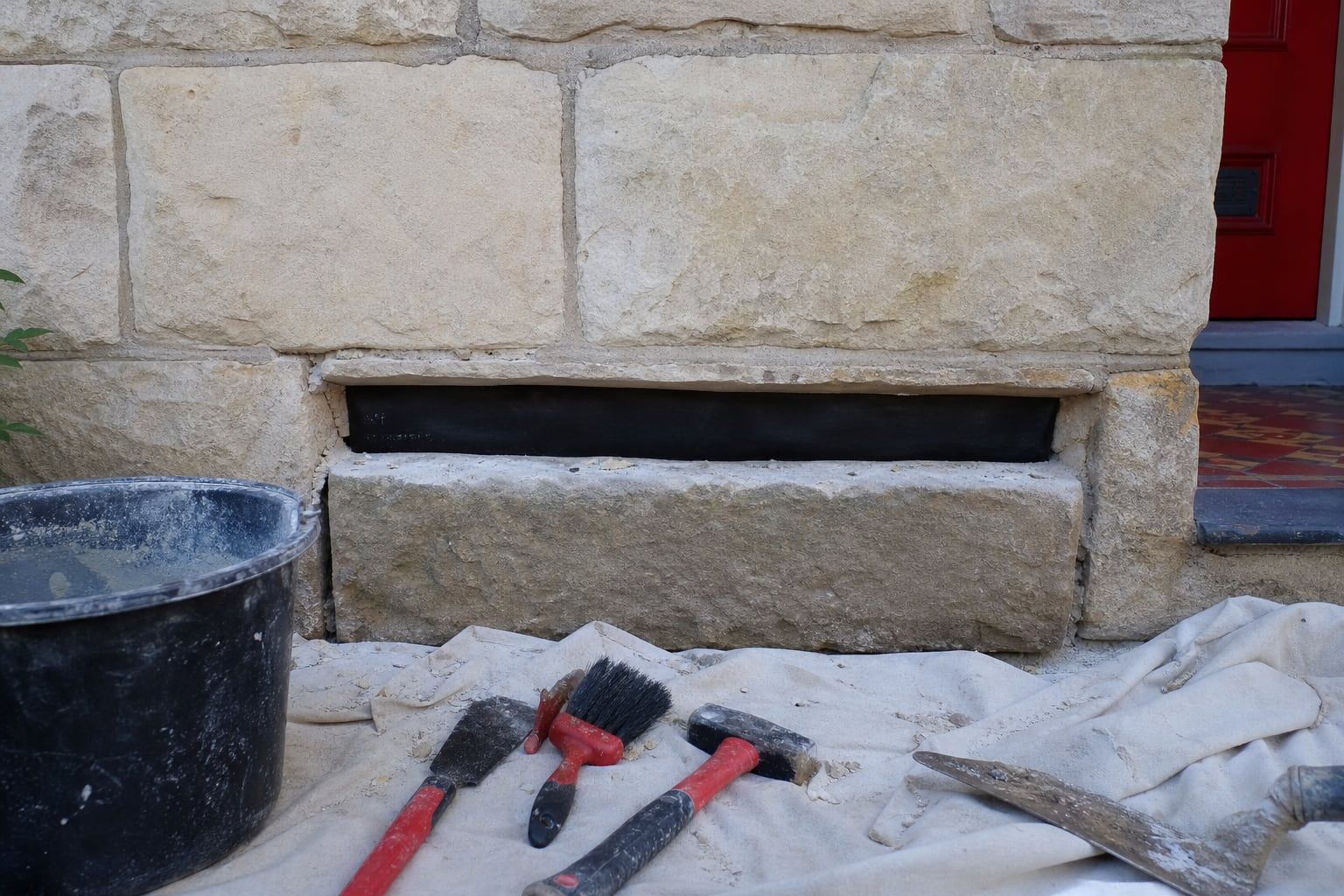
Brick veneer and cavity brick homes need open weep holes in the bottom course of bricks. If paving, mulch or soil covers them, water builds up inside the wall. Our guide on damp in 1970s brick homes explains why that matters.
A damp downstairs room
Damp, musty lower rooms in split-level homes, worst on the wall against the hill and worse after rain, usually mean water is coming through from the slope rather than rising. See damp in split-level homes.
Damp on the walls beside the pool
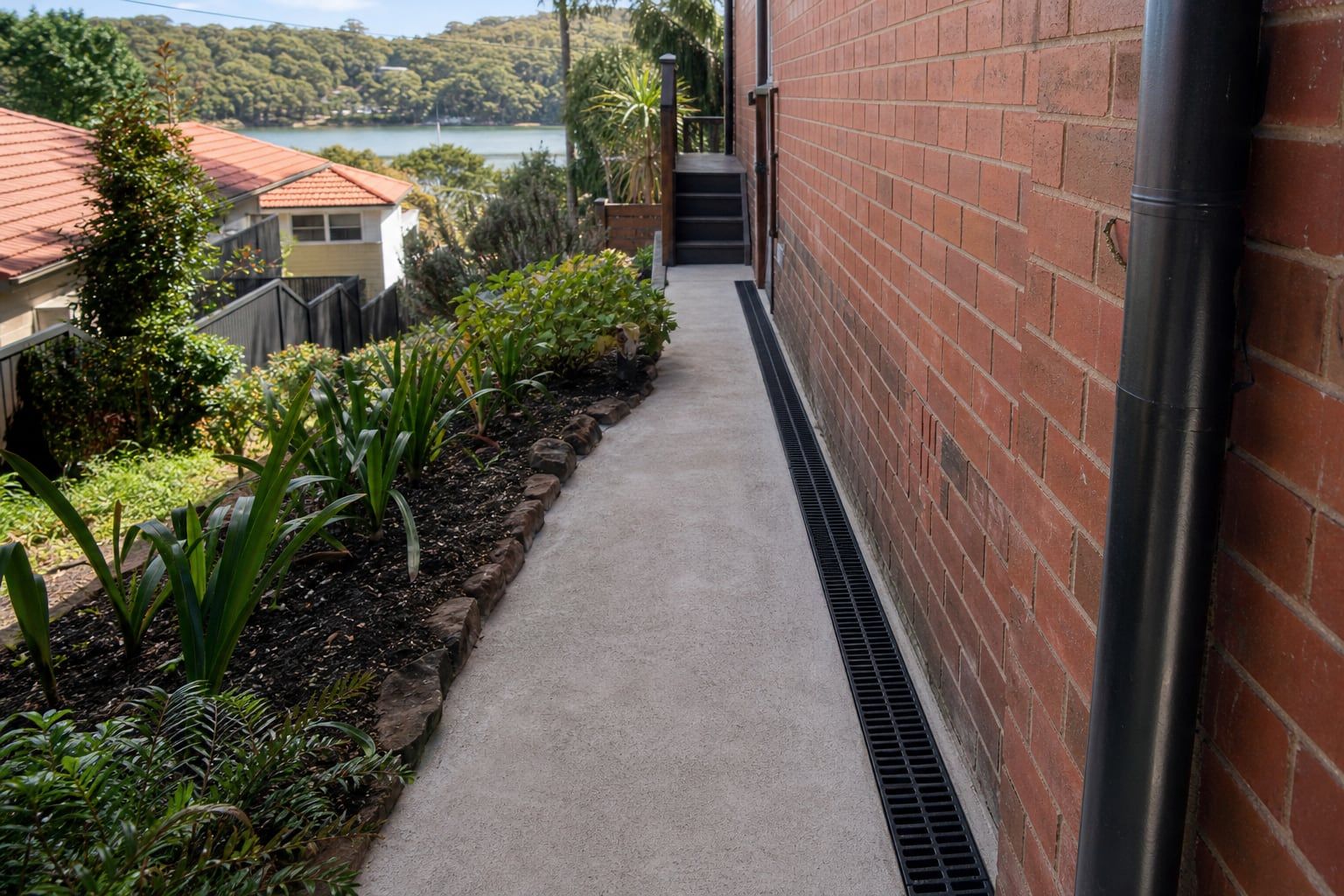
If the walls next to the pool or paved entertaining area are the damp ones, check the paving level and fall. Surrounds laid above the damp course or falling toward the house are a common cause. Our guide on pool surrounds and damp walls covers it.
A musty smell and cupping floors
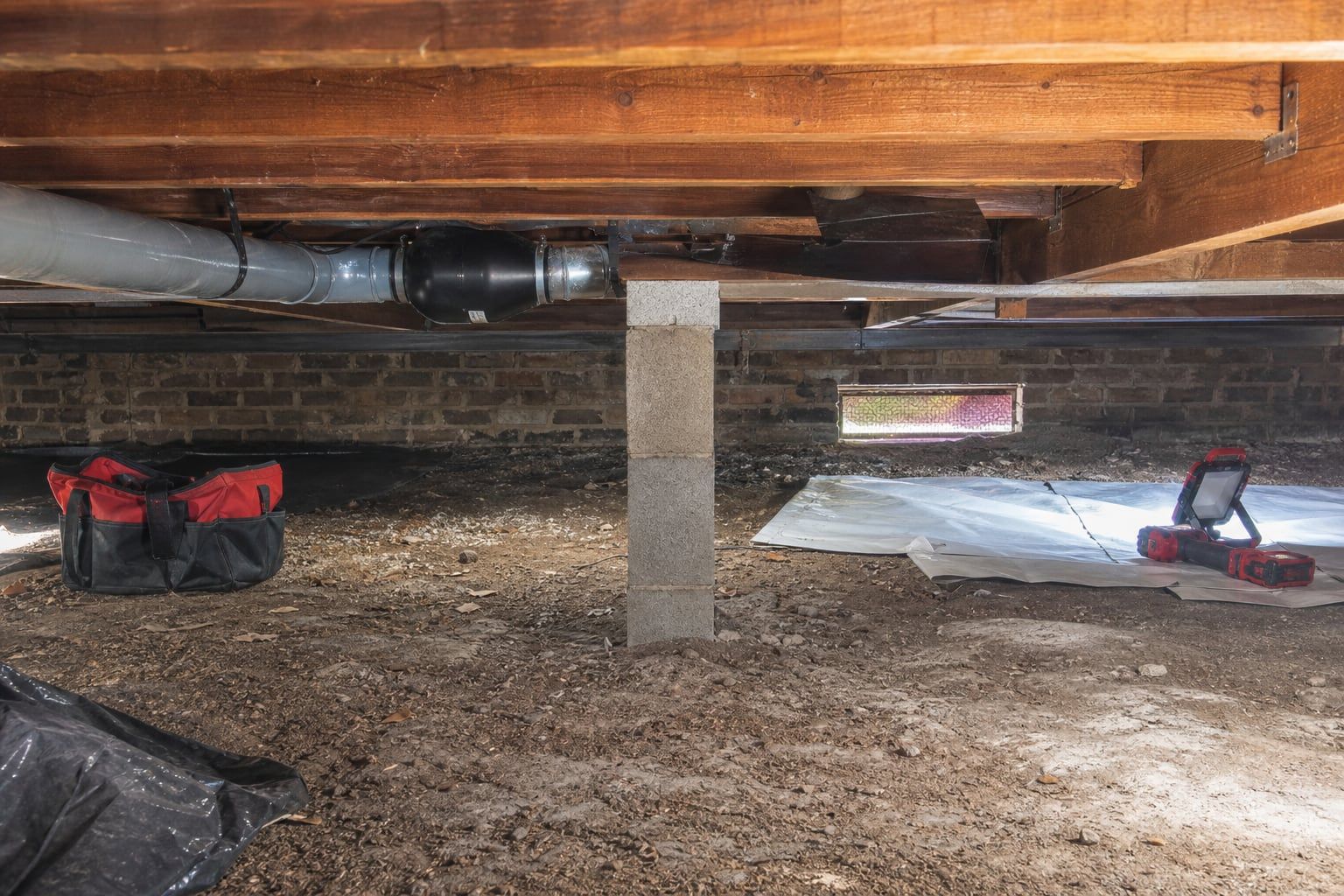
A stale, earthy smell with floorboards that cup or feel soft points to a damp subfloor, often because decks or garden beds have covered the vents. Subfloor ventilation is the usual fix.
Powdery render near the beach
External render going powdery or falling away high on walls facing the ocean in Cronulla, Woolooware, Kurnell or Bundeena is usually salt from the air rather than rising damp.
When the signs add up
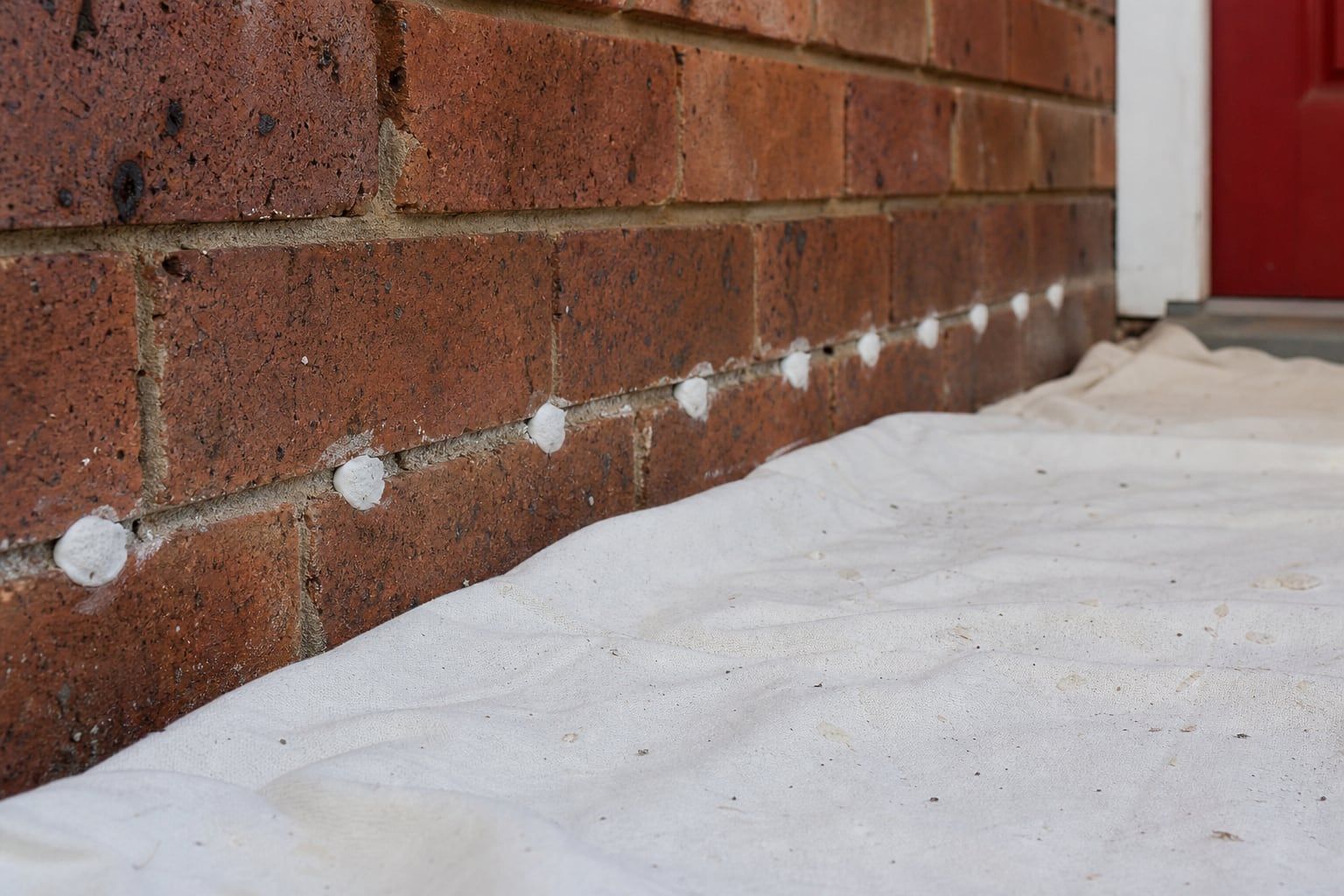
It’s likely rising damp when the damage runs along the base of ground-floor brick walls on several sides, fades out below about a metre, is there in dry weather and comes with salt in the plaster. In that case the wall needs a new barrier, usually a chemical damp course.
When it doesn’t fit, the answer may be drainage, tanking, weep holes or airflow. That’s why we take readings before quoting. Our page on rising damp treatment explains how, and our overview of Sutherland Shire rising damp covers the whole job.
Updated
What fixes these symptoms in the Sutherland Shire
More on damp for Sutherland Shire homeowners
- Damp in split-level homes: lower floors cut into Sutherland Shire sandstoneWhy the lower floors of split-level homes on Shire slopes get damp, how to tell it from rising damp, and what keeps them dry.
- Pool surrounds and damp walls: when the backyard is wetting the houseHow pools, paved entertaining areas and built-up backyards put water against Shire walls, and how to fix the drainage without starting over.
- Damp in 1970s brick homes: what to check in Shire houses of that eraHow double brick, cavity brick and brick veneer homes of the sixties and seventies get damp, and the checks that find the cause quickly.
Questions about rising damp symptoms
Something else on your mind? Call and ask.
What's the most reliable sign of rising damp?
Damage along the base of ground-floor walls on several sides, fading out below about a metre, present in dry weather, with salt in the plaster. Damp that's only on one side of the house or worse after rain usually has another cause.
My house is only 40 or 50 years old. Can it have rising damp?
It can, but in houses of that age the cause is more often soil, paving or a pool surround built up over a damp course that's still intact.
Should I fix the paint first?
No. Repainting a damp, salty wall only lasts a few months. Fix the cause, replace the damaged plaster, then paint.