Chemical Damp Course Sutherland Shire
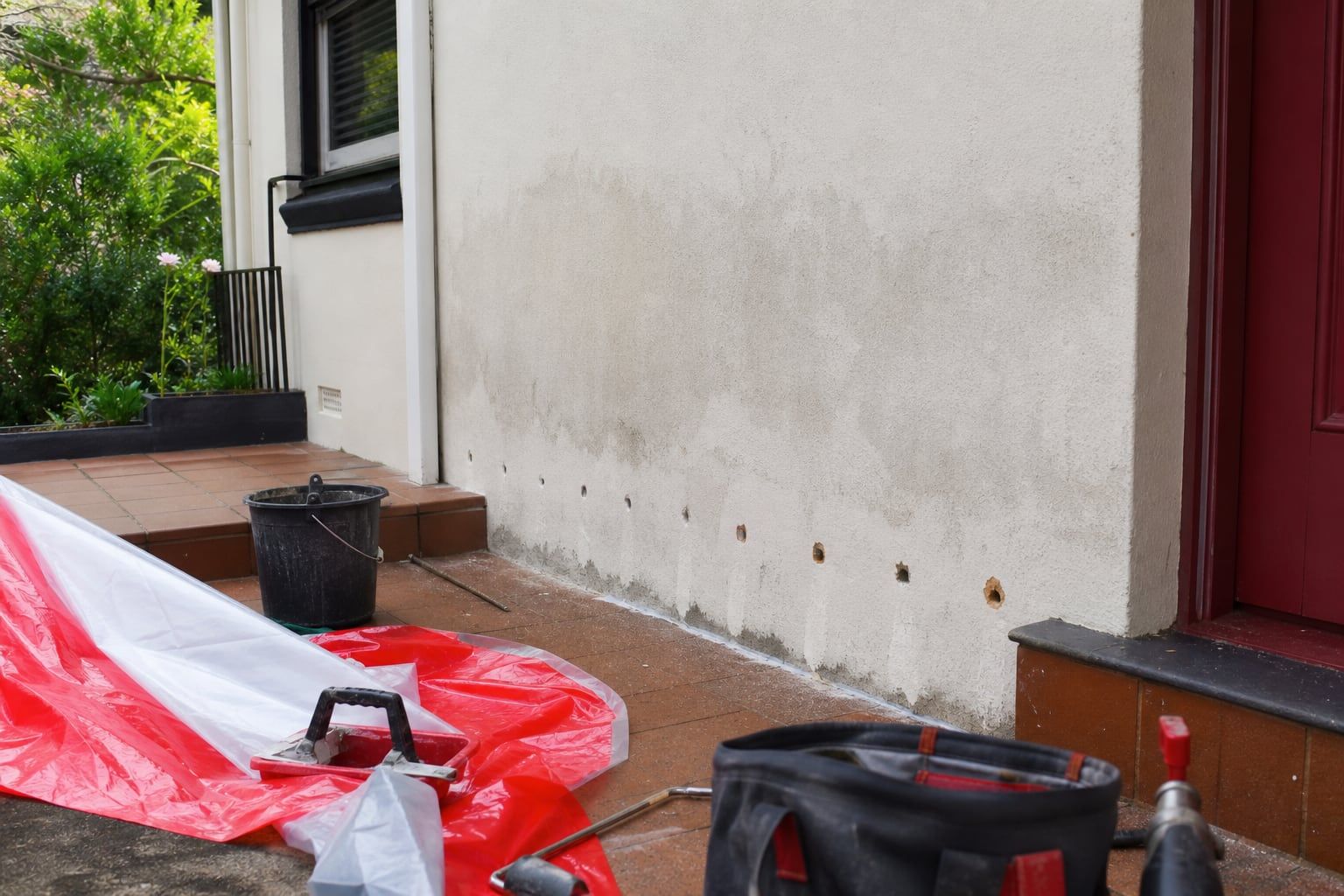
A new damp barrier injected into the base of brick walls, with the finish restored once it's dry.
A chemical damp course is the standard way to put a new barrier into a brick wall with rising damp. It’s done from one side of the wall, along a single mortar joint, without removing any bricks. In the Sutherland Shire we use it mostly on solid and double brick homes, where the original course has failed or has been bypassed by later work.
How the barrier works
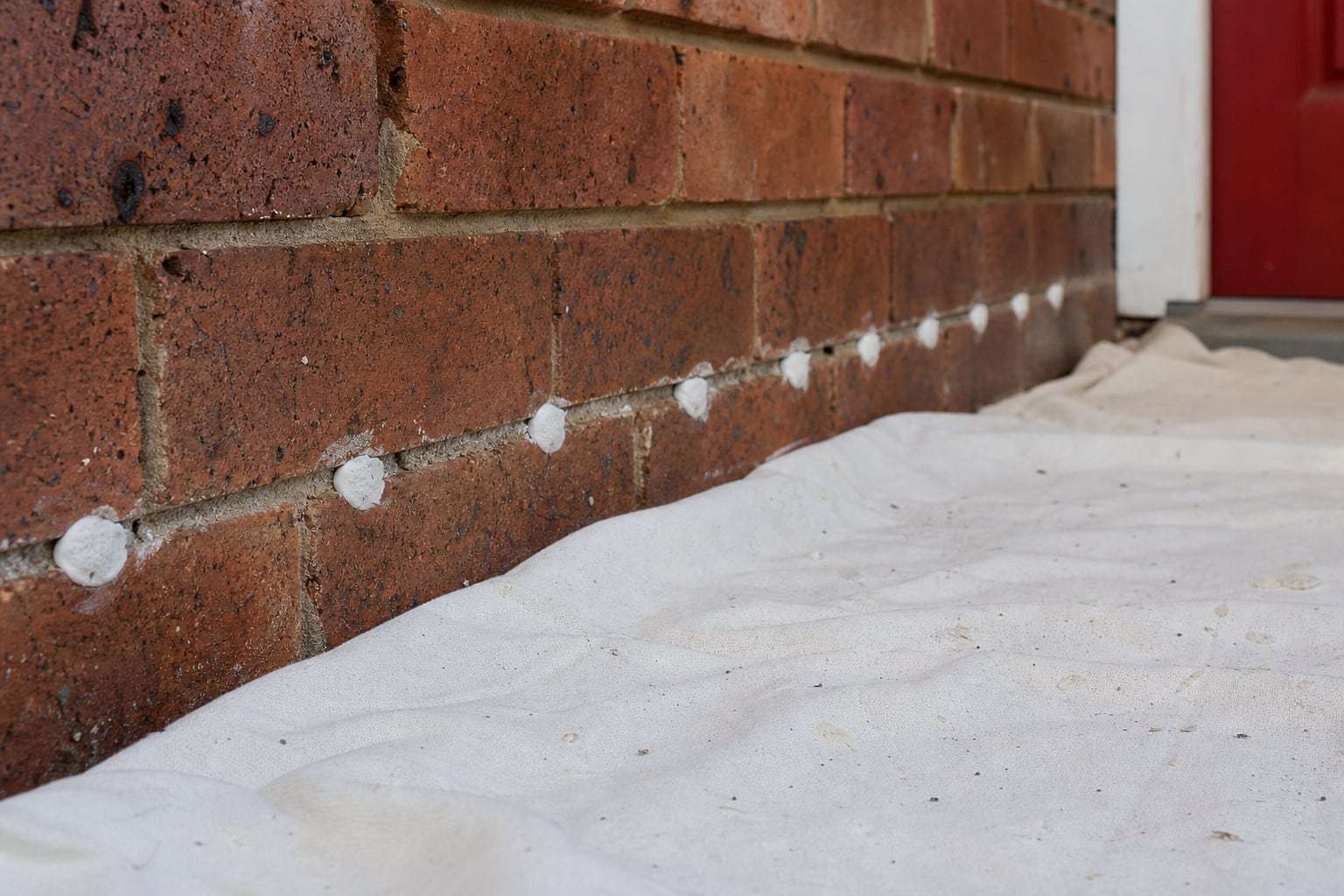
We drill a row of holes into a continuous mortar bed near the base of the wall and inject each one with a damp-proofing cream. The cream spreads sideways through the mortar until the treated zones join, forming a continuous water-repellent band. Water can’t rise past it, and the wall above gradually dries.
Holes sit in the joint, not the brick, and are mortared over in a matching colour.
Which Shire homes suit it
Injection suits solid and double brick walls with sound mortar. In the Shire, that includes older brick cottages in Sutherland, Kirrawee and Gymea, the post-war brick homes of Caringbah, Miranda and Jannali, and the double brick and cavity brick houses built through the sixties and seventies across Kareela, Sylvania, Engadine and Menai.
Brick veneer is different. A veneer home has one skin of brick outside a timber frame, so damp in the brick rarely reaches the rooms. The usual cause of damp in veneer is blocked weep holes or soil over the base of the wall, and the fix is outside. Our guide on damp in 1970s brick homes explains how to tell what you have.
Walls with a sandstone base, or brick too soft to hold the cream, get a physical damp course instead.
Getting the line right
The barrier has to sit below the internal floor and above the ground or paving outside. On the Shire’s sloping blocks that often takes planning: ground levels change along a wall, split-level homes have floors at different heights, and backyards have often been raised with paving or pool surrounds since the house was built.
Where paving or soil sits above the line, it needs to come down or be drained, or water just goes around the new barrier. Our guide on pool surrounds and damp walls covers that.
Cavity walls
Many Shire homes built from the fifties to the seventies have cavity brick walls. Both skins need treating, and the bottom of the cavity is checked for mortar droppings or rubble that can bridge it. Weep holes in the outer skin need to be clear so any water in the cavity can drain.
How long it takes
Drilling and injecting an average Shire home takes a day or so. The cream keeps spreading through the mortar over the following weeks, and the wall starts drying from the base upward. Re-rendering is booked for when the wall is ready, which the quote sets out.
After the barrier
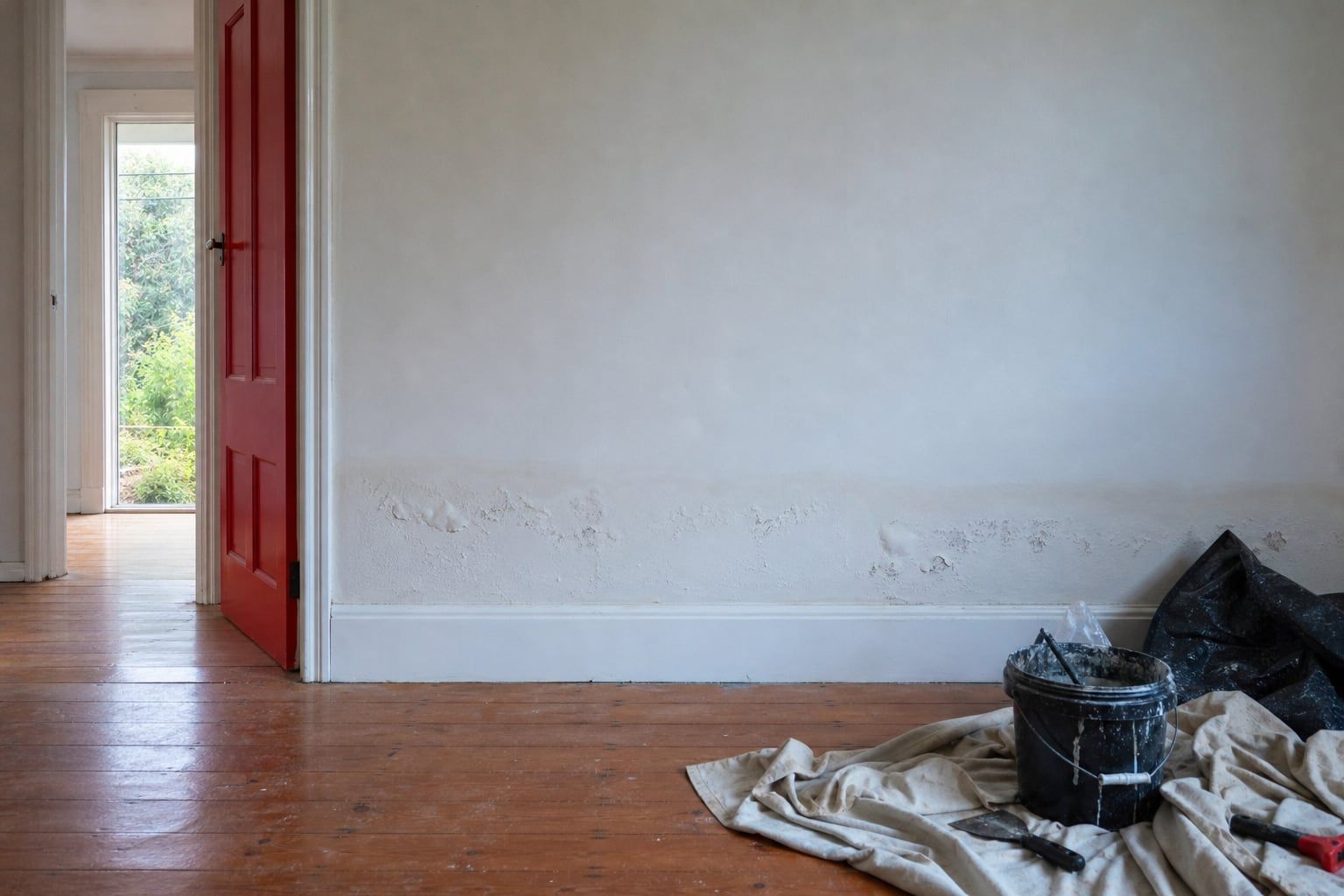
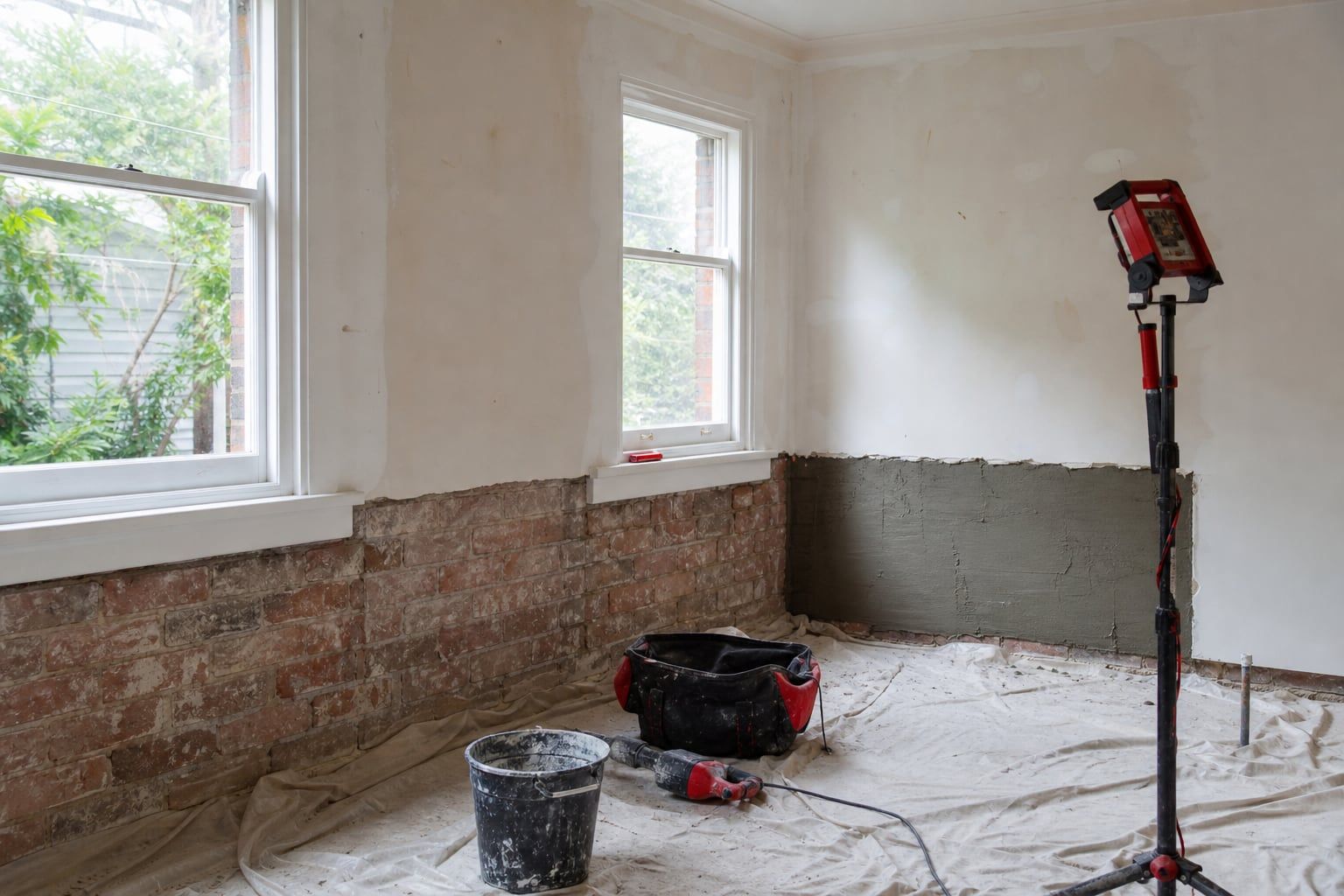
The wall above the barrier is still damp and still holds salt. Plaster or render that has been sitting on that wall will keep blistering until it’s replaced. Every quote includes stripping the damaged finish and applying a salt-resistant render once the wall has dried enough.
For how injection fits into a wider repair with drainage or airflow, see rising damp treatment.
Updated
What good chemical damp course looks like
Chemical Damp Course in the Sutherland Shire: step by step
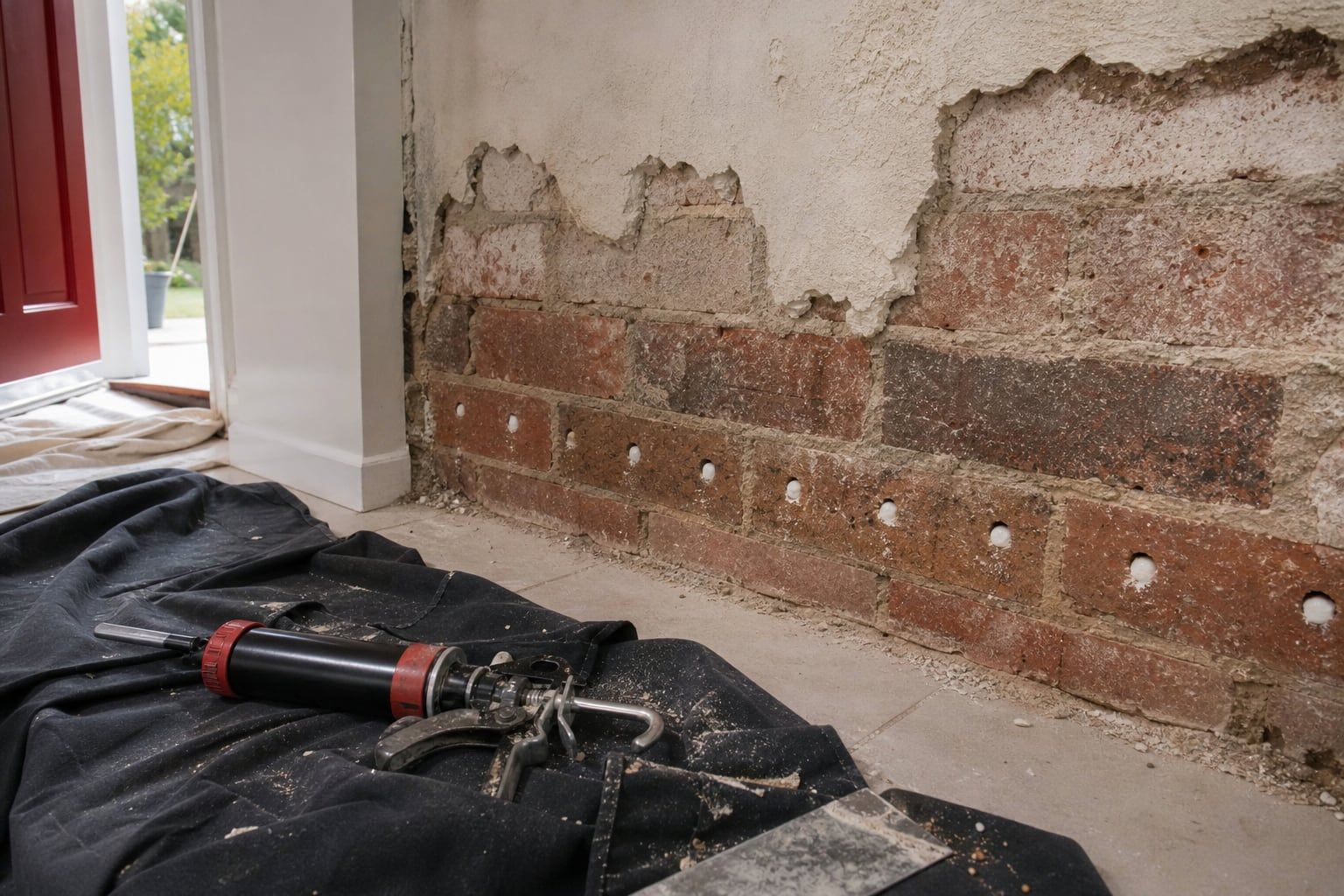
- Locate the course lineWe find a continuous bed joint under the internal floor level and clear of the ground outside.
- Drill at spacingHoles go into that joint at set centres, to a depth that suits each wall.
- Fill with creamDamp-proofing cream is injected and spreads along the joint to form the barrier.
- Patch and renderDrill holes are mortared over in a matching colour and salty render is replaced later.
Chemical Damp Course across the Sutherland Shire
Chemical Damp Course questions in the Sutherland Shire
Something else on your mind? Call and ask.
Does injection work on cavity brick?
Yes, with both skins treated. We also check the bottom of the cavity, because mortar droppings or debris there can bridge the gap and carry water inward above the new barrier.
Is injection right for brick veneer?
Seldom. In veneer homes the inner walls are timber framed, so damp in the outer brick rarely reaches the rooms. The usual fix is clearing weep holes and lowering soil or paving.
Can rising damp return after injection?
It can if paving, soil or render is later built up above the barrier. We'll show you where the course sits so future landscaping doesn't bridge it.
Chemical Damp Course guides for Sutherland Shire homeowners
- Pool surrounds and damp walls: when the backyard is wetting the houseHow pools, paved entertaining areas and built-up backyards put water against Shire walls, and how to fix the drainage without starting over.
- Damp in 1970s brick homes: what to check in Shire houses of that eraHow double brick, cavity brick and brick veneer homes of the sixties and seventies get damp, and the checks that find the cause quickly.