Salt-Damaged Plaster Repair Sutherland Shire
Strip the plaster the salt has ruined and finish with a render that copes with what's left behind.
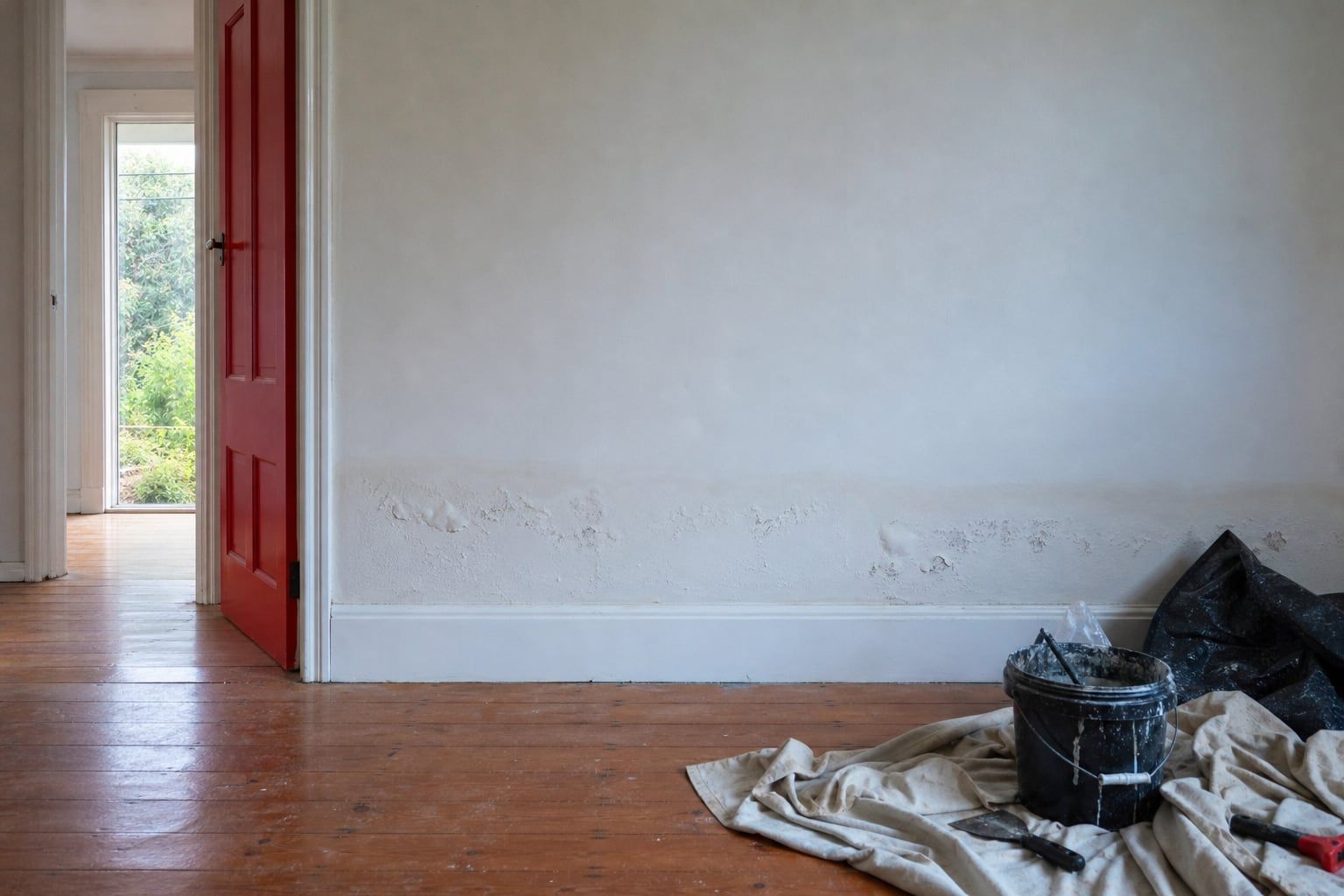
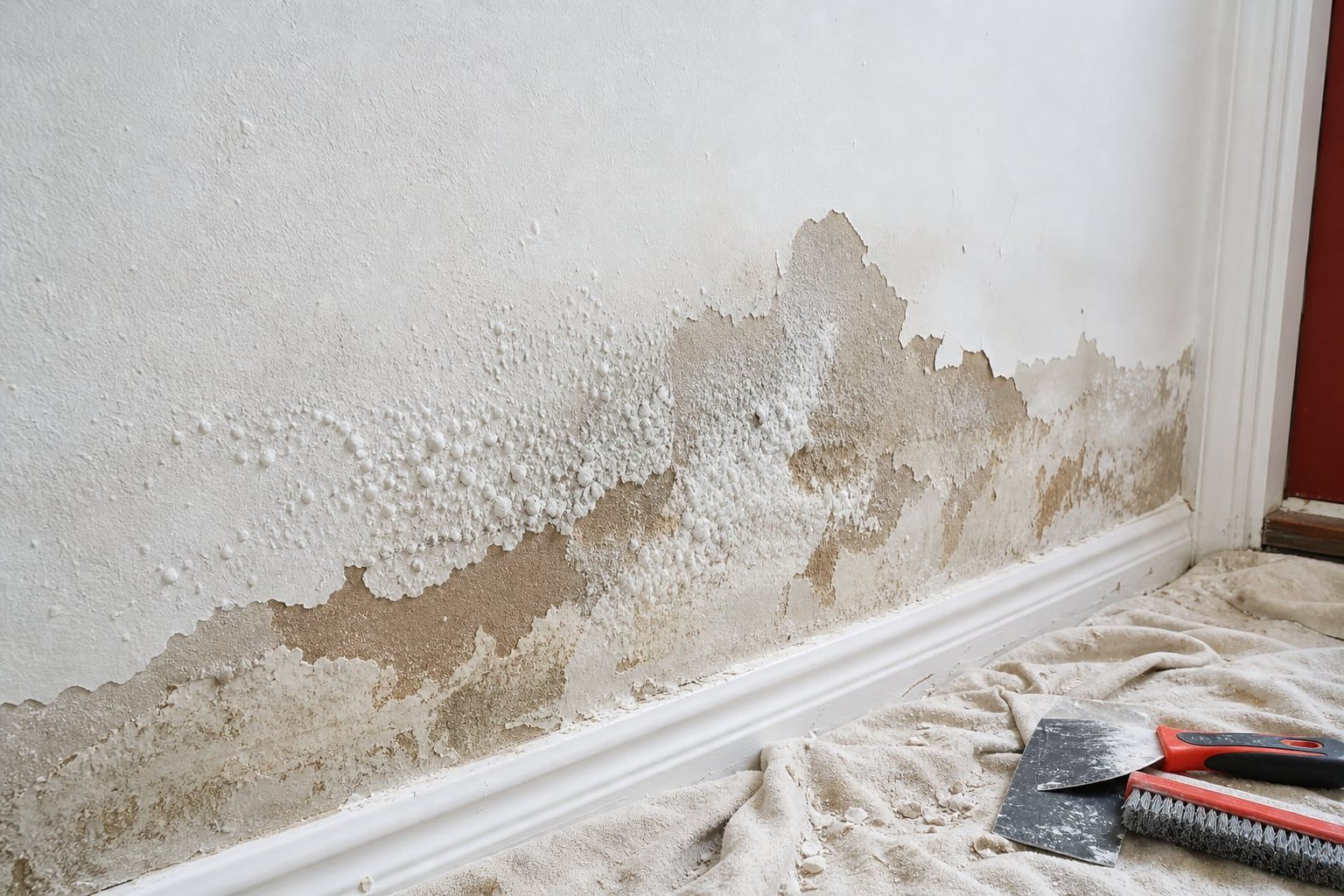
Salt-damaged plaster repair is the final part of fixing a damp wall. Water rising through masonry carries salts with it, and when the water evaporates at the surface, the salts stay in the plaster or render. They don’t leave when the damp course or drainage goes in. They keep drawing moisture from humid air, so the paint keeps lifting and the plaster keeps breaking down.
That’s why a damp repair without a new finish often looks like it hasn’t worked. Every quote we write includes replacing the damaged plaster.
What salt damage looks like
Look for paint blistering in a band low on the wall, white powder or fluffy crystals on the surface, plaster that crumbles or sounds hollow when tapped, a brownish tide mark, and skirtings swelling or rotting behind the paint. Outside, render goes powdery and falls away in patches. Our page on symptoms of rising damp shows each one.
Coastal walls
In Cronulla, Woolooware, Kurnell and Bundeena, walls facing the ocean also collect salt from the air. That salt settles in external render and can make it fail high up the wall, with no rising damp at all. We test to see which source the salt is from, because it changes the repair.
How we repair it
Find the limit. We test above the visible damage before marking the cut line, so no salty plaster is left at the edge to attack the new finish.
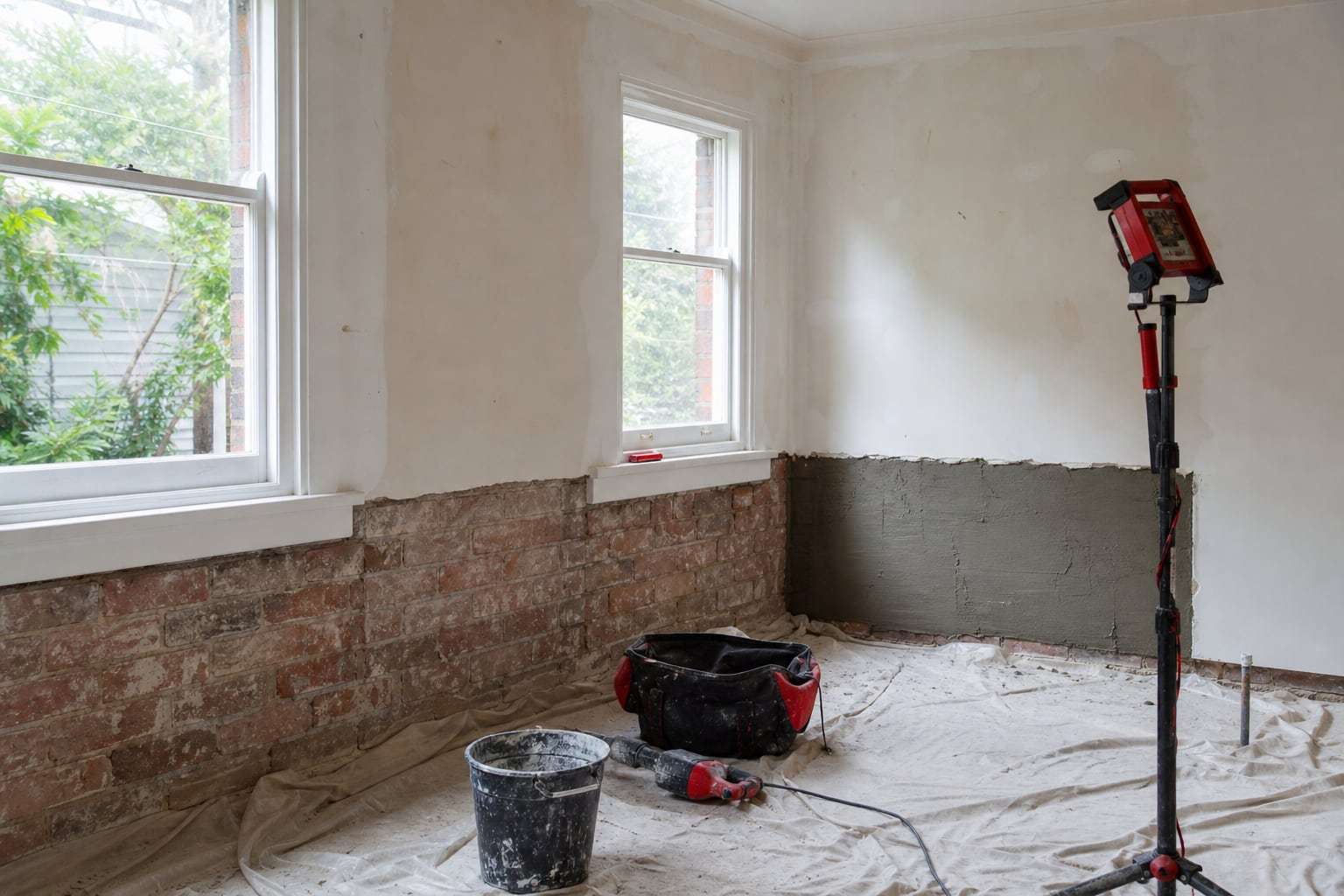
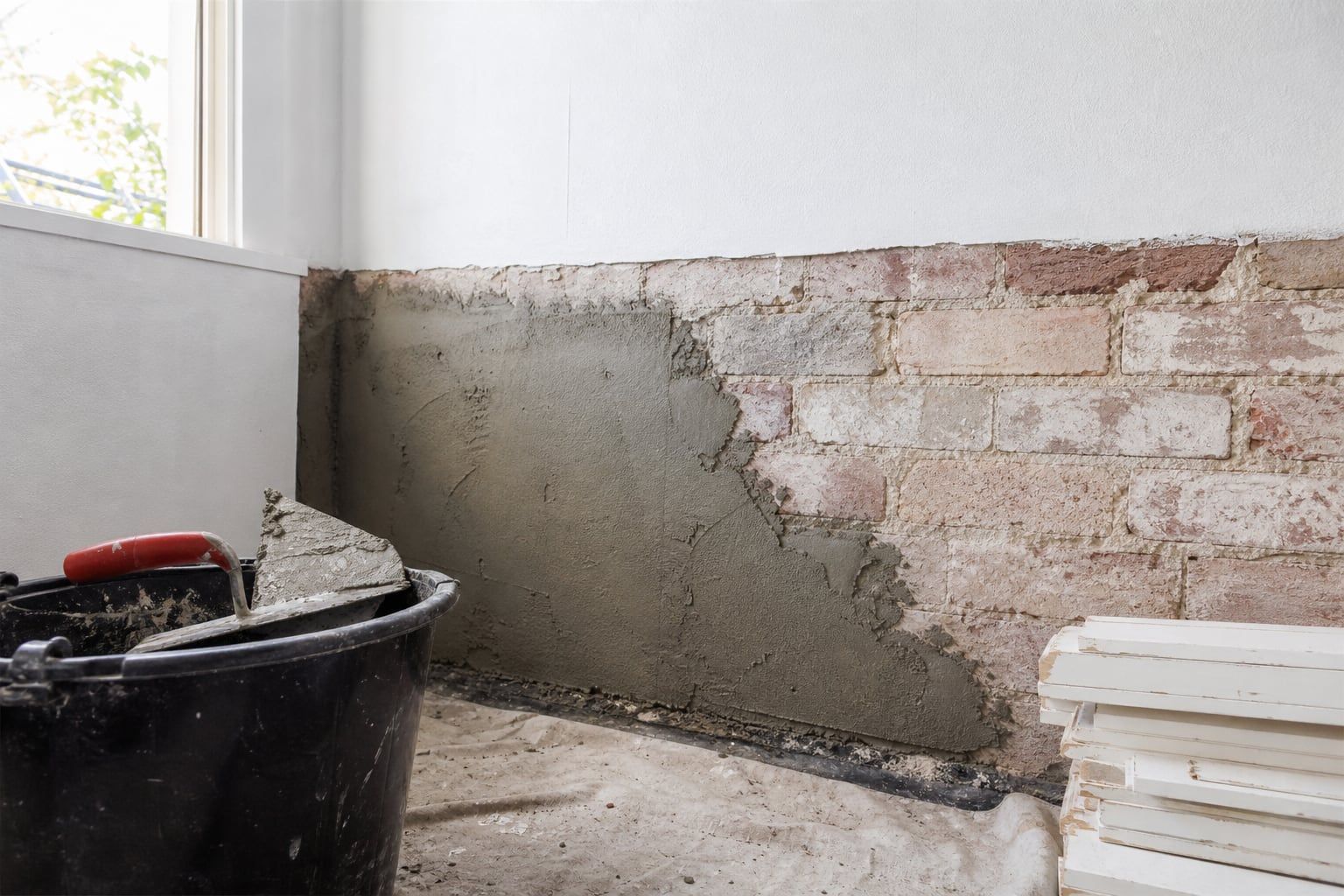
Remove it. All contaminated plaster or render is cut back to sound masonry in a clean line above the highest salty point.
Let it dry. The bare wall needs time after the damp course or drainage work. A single-skin internal wall dries quickly; a double brick external wall or a sandstone base takes longer.
Render it. We apply a breathable, salt-tolerant render system that lets the wall keep drying while holding any remaining salt within the render instead of at the paint. It’s finished smooth or textured to match the room.
Only after the water is stopped
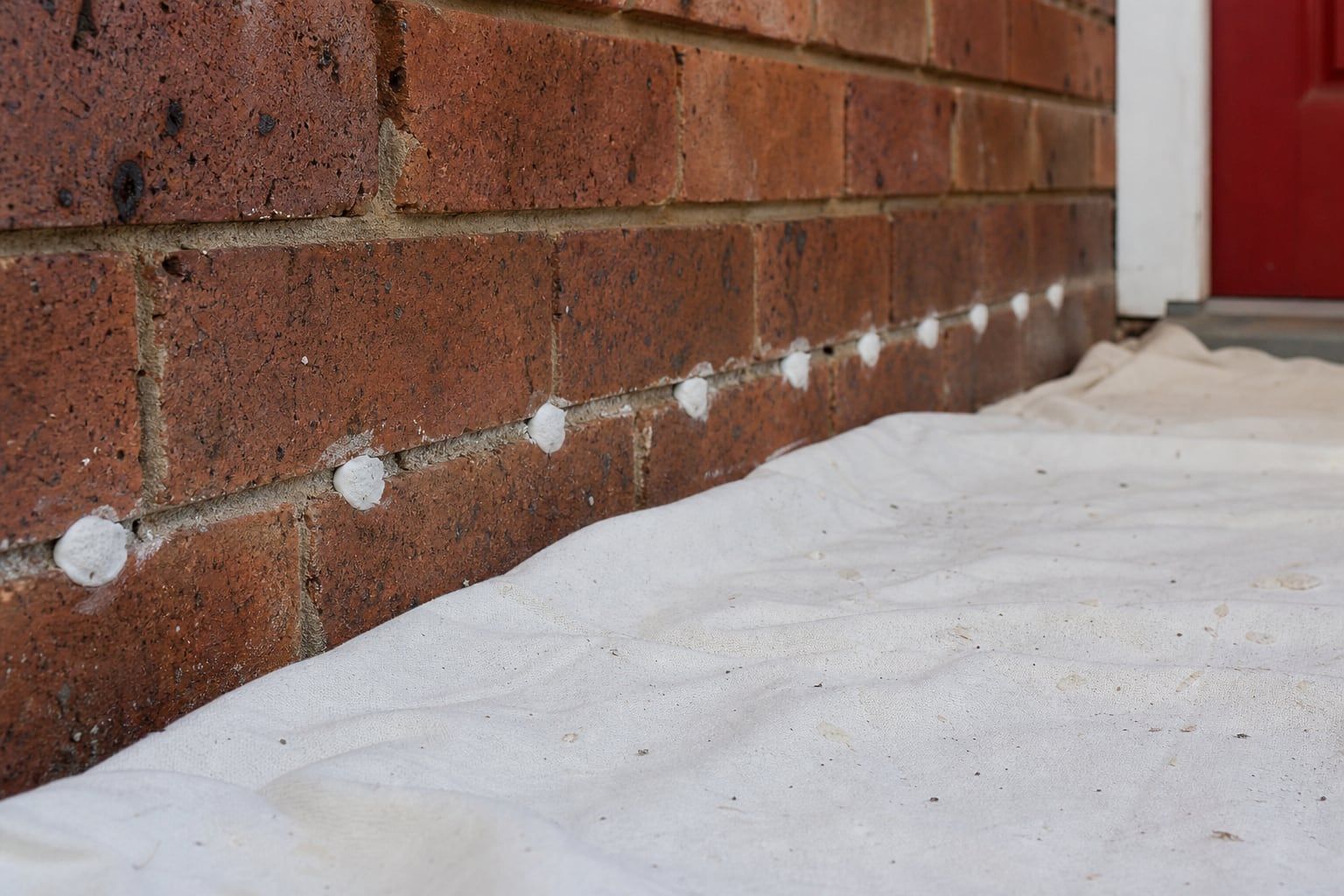
Plaster repair only lasts when the cause has been dealt with. It always follows an injected damp course, a physical damp course, drainage, tanking or subfloor ventilation, depending on what the readings showed. New render on a wall that’s still wet will fail the same way the old plaster did.
Veneer homes
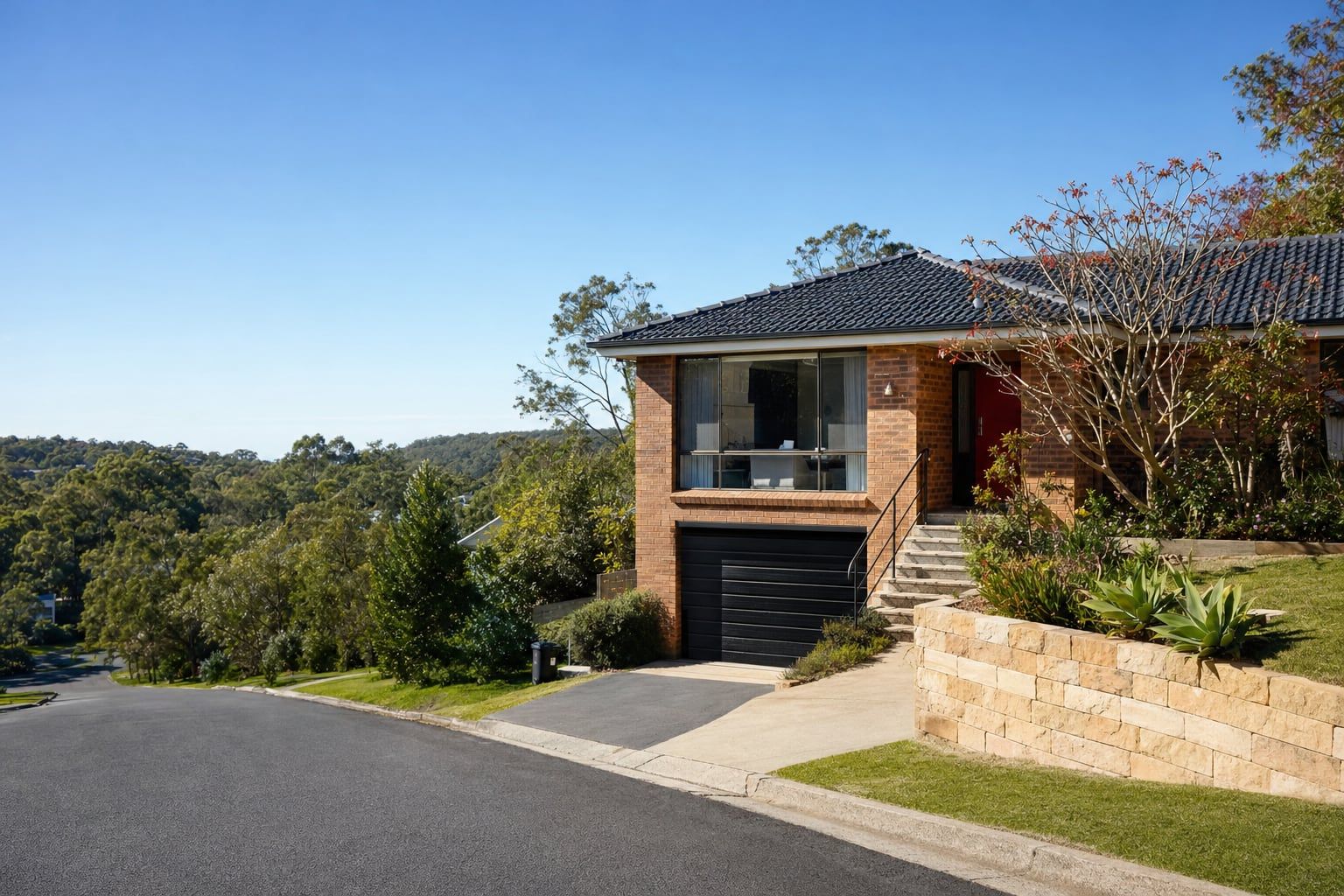
In brick veneer homes, internal walls are usually plasterboard on a timber frame, not plaster on brick. Plasterboard damaged by damp is replaced rather than rendered, once the water source, usually blocked weep holes or raised soil, has been fixed. Our guide on damp in 1970s brick homes explains how to tell what your walls are.
Timing
Stripping a room usually takes a day. Drying varies with the wall. Rendering takes a day or two per room, then the render cures before paint. We sequence rooms so the whole house isn’t out of action at once.
Skirtings and fittings
Skirtings that have rotted or swollen are replaced, and power points or fittings removed for the work are refitted. Where your existing skirting profile is still available, we match it.
Included in the quote
Plaster repair is part of every rising damp treatment quote, priced wall by wall.
Updated
What good salt-damaged plaster repair looks like
Salt-Damaged Plaster Repair in the Sutherland Shire: step by step
- Test above the stainSalt usually sits higher than the visible damage, so we test before marking where to cut.
- Cut it backContaminated plaster or render is removed to bare masonry in a straight line.
- Give it timeThe bare wall is left to dry for a period that matches its thickness.
- Apply the new finishBreathable, salt-tolerant render goes on and is finished to suit the room.
Salt-Damaged Plaster Repair across the Sutherland Shire
Salt-Damaged Plaster Repair questions in the Sutherland Shire
Something else on your mind? Call and ask.
Why does my paint keep blistering on the same wall?
Salt in the plaster pulls moisture from the air and crystallises behind the paint. Until the salty plaster is removed, repainting only buys a few months.
Do you repair outside render too?
Yes. Salt damage on external render is common low on walls with rising damp, and on walls facing the ocean in Cronulla, Kurnell and Bundeena.
What paint should I use after?
A breathable paint suits a wall that has been damp better than a standard acrylic, which forms a tight skin and slows drying. We'll recommend one when the render is ready.